The conversation around technology in Morocco is changing rapidly. Walking through the vibrant streets of Casablanca, the bustling tech hubs of Tangier, or the entrepreneurial ecosystem growing in Marrakesh, one can feel a tangible shift. We are no longer just consumers of global tech trends; we are stepping onto the playing field.
But where exactly does Morocco stand today in terms of technology, digitalization, and artificial intelligence (AI)? More importantly, how do we prepare our population to ensure that automation and AI become tools for our collective progress rather than disruptive forces that leave people behind?
To take the next leap forward, we must look honestly at our current strengths and bridge the gaps that hold us back.
The Present Landscape: A Tale of Massive Goals and Tech Paradoxes
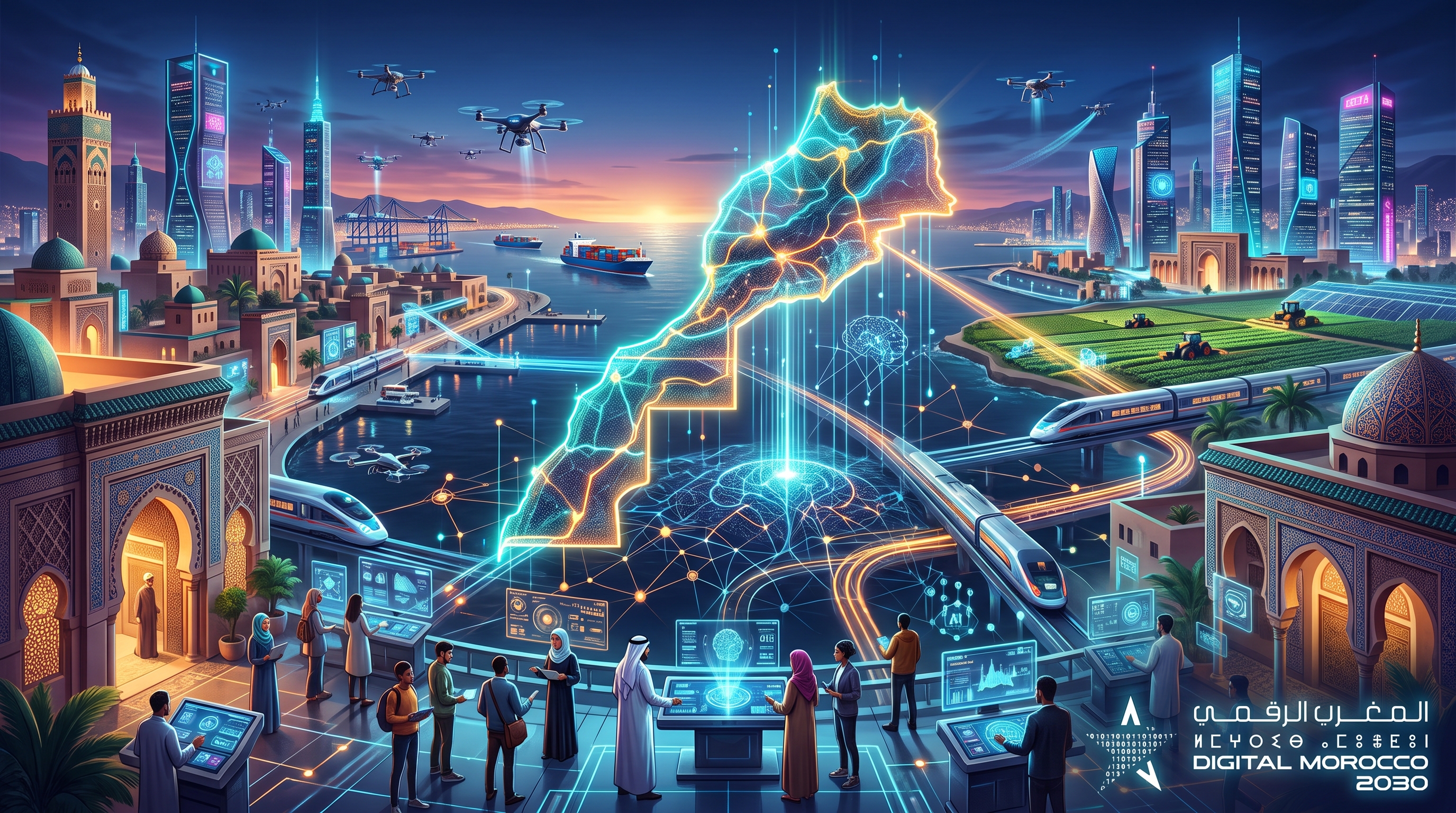
On paper, Morocco’s digital ambitions are impressive. Driven by the landmark Digital Morocco 2030 Strategy, the government has set a bold course. We are investing billions of dirhams to digitize public services, expand high-speed fiber networks, and establish the Kingdom as North Africa's premier technology hub. Global tech giants are setting up research centers here, and we are actively collaborating with leading names to develop specialized AI models tailored to Arabic and Moroccan Darija.
However, a closer look at our economy reveals a unique paradox. A recent World Bank update highlighted that while Morocco successfully exports advanced tech services and high-tech components, domestic integration remains shockingly low. Over 98% of Moroccan businesses utilize basic digital tools, yet fewer than 5% leverage big data or advanced AI in their daily operations.
We have a two-speed tech ecosystem. A highly sophisticated, export-focused tech elite exists alongside a traditional business sector—dominated by small and medium-sized enterprises (SMEs)—that still relies on legacy systems and pen-and-paper processes. To pull the entire nation forward, technology must move out of specialized zones and into every classroom, office, and farm across the country.
Bridging the Gap: What Do We Need to Level Up?
Transitioning into an AI-powered, automated economy requires more than just buying software. It demands a systematic update to our societal infrastructure. If we want automation to work for us, we must focus on four foundational pillars.
1. Demystifying Tech and Re-skilling the Workforce
The biggest hurdle to digital transformation is not money; it is mindset and education. We cannot build a high-tech future if our workforce is intimidated by it.
- In the Classrooms: We need to update school curricula. Coding, digital literacy, and logic should be taught as foundational skills right alongside math and reading.
- For the Current Workforce: We must implement national upskilling programs. A merchant in a traditional market or a logistics worker in a warehouse does not need a degree in data science. They simply need practical, accessible training on how to use digital platforms to track inventory, market products, and manage finances.
2. Upgrading Infrastructure to Eliminate Inequality
AI and automation require vast amounts of data and reliable connectivity. While major cities enjoy high-speed 4G and growing fiber connections, our rural communities cannot be left in a digital shadow. Bridging the digital divide means ensuring a child in a remote village in the High Atlas has the same stable internet access as a student in Rabat. Without equitable infrastructure, technology risks widening the gap between social classes rather than narrowing it.
3. Creating a Modern, Trustworthy Legal Framework
For citizens and businesses to fully embrace AI, they must trust it. Morocco is currently drafting comprehensive digital laws, including the proposed Digital X.0 Framework Law, designed to address cybersecurity, personal data protection, and ethical AI deployment. Clear rules give businesses the confidence to invest in automated systems and protect everyday citizens from data exploitation and algorithmic bias.
4. Supporting Local Innovation and Startups
Relying entirely on imported software creates a dangerous dependency. Our local startups understand Moroccan challenges—whether in smart agriculture to fight drought, localized fintech for unbanked populations, or healthcare logistics—far better than any foreign tech company. By improving access to funding and cutting through red tape, we can empower local entrepreneurs to build solutions designed specifically for our society.
The Human Bottom Line: Technology as an Equalizer
Automation frequently sparks anxiety about job losses. In a young dynamic nation like Morocco, these concerns are valid. However, history shows that technology changes the nature of work rather than simply eliminating it.
The goal of introducing AI and digital tools into Morocco is not to replace human hands with machines. The true objective is to remove repetitive, exhausting, and inefficient tasks from our daily routines, allowing our people to focus on creativity, strategy, and problem-solving.
By strategically preparing our population, upgrading our infrastructure, and supporting local talent, we can transform the coming digital shift into a massive engine for growth. The future is digital, and Morocco has all the potential required to lead that future—provided we build it together, leaving no one behind.