
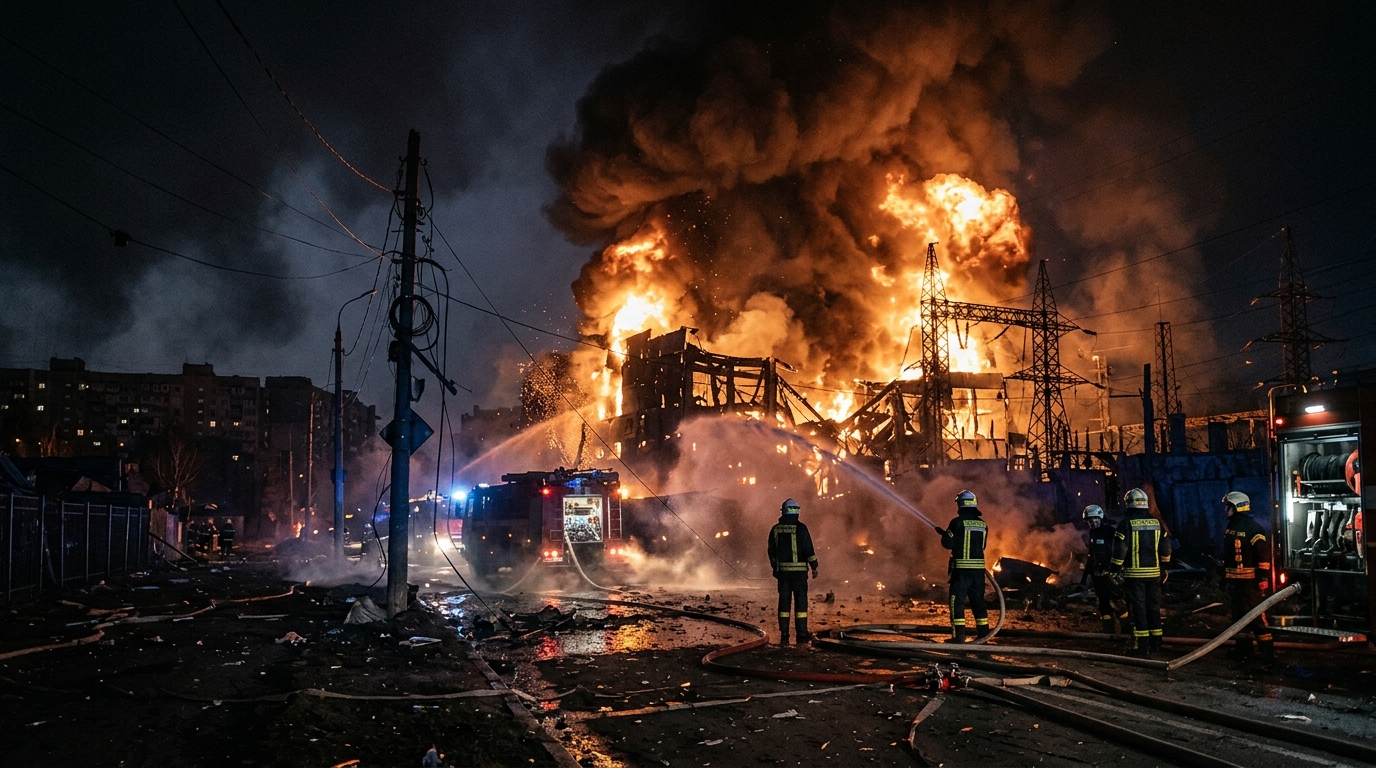
Large parts of Ukraine's capital, Kyiv, are facing emergency power outages and water disruptions after a massive wave of Russian drone attacks targeted critical infrastructure. Concurrently, targeted drone strikes in the eastern city of Kharkiv have claimed the lives of two civilian market traders and cut off electricity to hundreds of thousands of residents.
The coordinated air assault underscores Moscow's systematic strategy to dismantle Ukraine’s power grid right as seasonal temperatures begin to drop. Despite recent high-level international rhetoric regarding potential diplomatic de-escalation on energy targets, the scale of these strikes signals an uncompromising escalation on the ground.
Kyiv Plunged into Darkness
The state energy operator, Ukrenergo, confirmed that widespread emergency blackouts were triggered across the capital and its surrounding region to prevent a total grid failure. The drone waves targeted critical electricity distribution nodes, causing secondary infrastructure failures. Kyiv Mayor Vitali Klitschko reported that the sudden loss of electricity knocked out local pumping stations, causing severe water pressure drops across multiple urban districts. Emergency crews began switching water facilities to backup generators immediately, but full restoration remains stalled due to ongoing air raid alerts.
Falling drone debris also sparked localized fires in residential neighborhoods, including the capital's Shevchenkivskyi district, further straining municipal emergency services.
Fatalities at a Kharkiv Marketplace
In Kharkiv, Ukraine's second-largest city, the impact was explicitly civilian. Russian drones struck a bustling local market across four distinct districts. Regional Governor Oleh Syniehubov and Mayor Ihor Terekhov confirmed that two vendors—a 71-year-old woman and a 58-year-old man—were killed instantly while working at their stalls. At least 19 others were injured, with several remaining in critical condition at local hospitals.
Beyond the human toll, the attacks severely damaged local substations. Approximately 280,000 electricity customers in Kharkiv were instantly disconnected from the grid, compounding an already volatile utility crisis in the frontline region.
Immediate and Long-Term Consequences
The ripple effects of this latest bombardment go far beyond temporary darkness, altering both the humanitarian and geopolitical landscape:
- The Weaponization of Winter: This assault marks a aggressive continuation of what military analysts call Russia's fifth winter offensive. By continuously targeting thermal plants, substations, and gas facilities, Moscow aims to break civilian morale by depriving millions of heat, water, and light during freezing conditions.
- Systemic Grid Strain: While Ukrenergo crews managed to restore temporary connections to over one million consumers nationwide over the past 24 hours, the structural integrity of the grid is severely compromised. Moving forward, industrial sectors and residential zones face strict hourly consumption caps and mandatory rotating blackouts to prevent total network collapse.
- Political Fallout Over the "Energy Ceasefire": Geopolitically, the timing of these attacks carries heavy weight. The strikes occurred immediately following international claims that a back-channel "energy ceasefire" had been mediated. Ukrainian President Volodymyr Zelenskyy openly condemned the barrage as an act of deliberate disrespect toward international peace initiatives, pointing out that Ukraine had held its side of the agreement while Russia used the window to prepare more severe strikes.
As emergency teams work around the clock under the constant threat of secondary strikes, residents across Kyiv and Kharkiv are bracing for a prolonged period of utility instability. The immediate priority remains securing auxiliary power for hospitals and heating centers before winter sets in fully.