
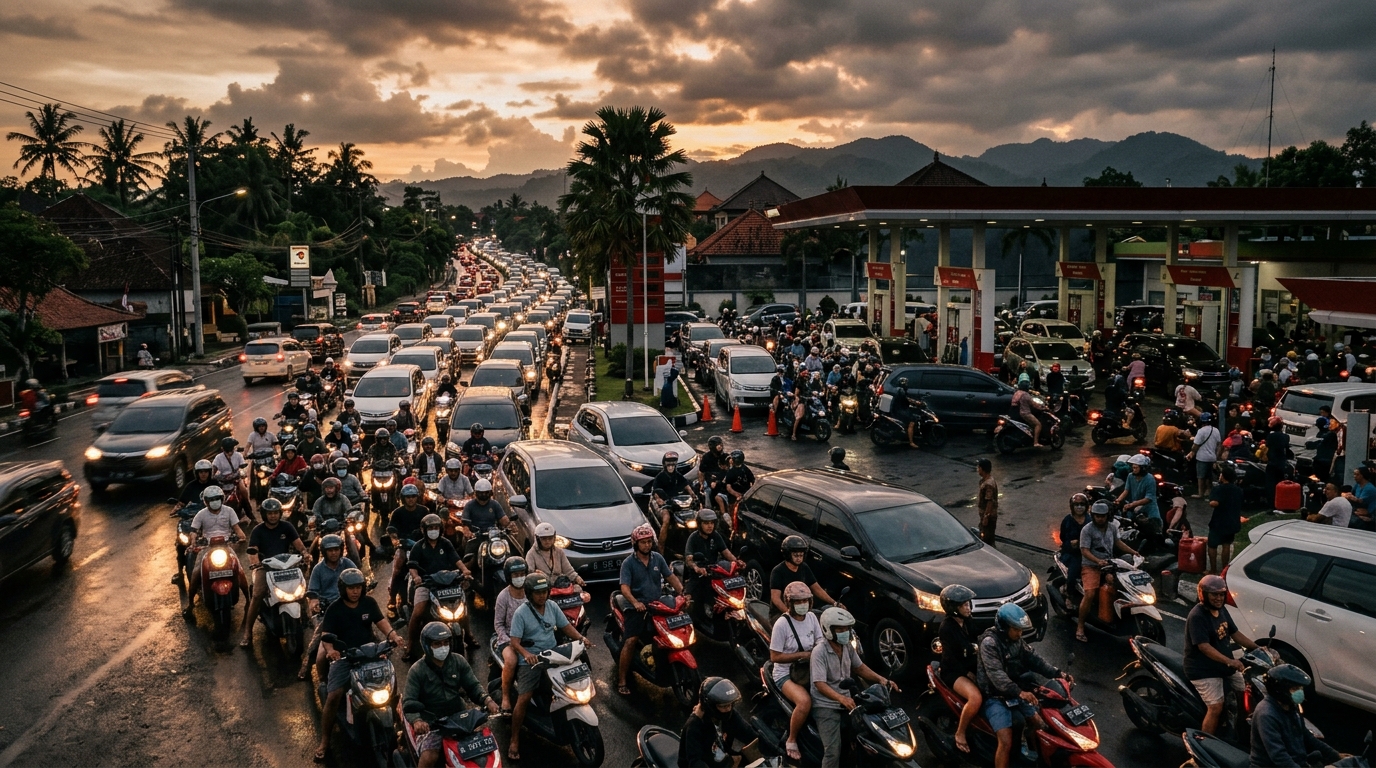
A sudden fuel shortage across Bali has triggered extensive traffic snarls and long queues at petrol stations, leaving residents, transport workers, and tourists stranded for hours across the Indonesian province. The disruptions began surfacing over the weekend of October 11–12, 2026, when several state-run filling stations across southern and central Bali ran completely dry of subsidized Pertalite and premium Pertamax grades.
Lines of motorbikes and cars have spilled onto primary roads in Denpasar, Badung, Kuta, and Tabanan, causing widespread congestion and raising concerns about local economic stability.
Chaos at the Pumps and Roadside Congestion
Drivers across the island report waiting between one and three hours to reach operating dispensers, with some arriving before dawn to secure fuel before supplies run out. In areas such as South Kuta and Tabanan, regional fuel deliveries fell by an estimated 30 to 50 percent below normal volumes early in the week, forcing multiple stations to shut their gates temporarily.
The scarcity has hit the informal economy hardest. Bali's roadside Pertamini kiosks—unregulated micro-vendors selling petrol in glass bottles to scooter commuters—have largely shuttered due to exhausted reserves. Ride-hailing drivers and local tour operators have reported significant delays, with some airport transfer services warning arriving passengers to account for unexpected detours and prolonged transit times.
Distribution Snags and Demand Surges
State-owned energy corporation Pertamina Patra Niaga stated that the crisis stems from technical delays in maritime deliveries compounded by a surge in domestic consumption. Average demand for Pertalite across Bali has climbed to roughly 2,200 kiloliters per day.
The supply chain faced immediate strain due to docking complications and technical anchor issues affecting tankers scheduled to unload at Bali's primary terminals in Pesanggaran and Manggis. Fuel flow rerouting between these depots created logjams, leaving tanker trucks stuck waiting for bulk replenishment while road congestion delayed deliveries to localized stations. Bali Governor Wayan Koster noted that widespread panic buying exacerbated the shortages, as motorists rushed to top off tanks simultaneously amid rumors of an island-wide dry spell.
Emergency Shipments and Extended Station Hours
To resolve the backlog, Pertamina activated an emergency distribution plan involving 26,200 kiloliters of fuel dispatched in phased shipments.
The tanker MT Prima docked with 18 million liters of Pertalite and 2.5 million liters of Pertamax, followed by the MT Klasogun carrying an additional 1.2 million liters. Additional tanker arrivals are scheduled through October 14 and October 16.
To clear the queues quickly, authorities and Pertamina implemented emergency operational changes:
- 24-Hour Operations: High-traffic stations across Denpasar and Badung are operating around the clock until queues subside.
- Direct Depot-to-Pump Expediting: Distribution fleets have been granted traffic clearance priority, with police officers deployed to manage lines and prevent dangerous bottlenecks on main arterials.
- Anti-Hoarding Oversight: Stations are instructed to restrict bulk sales into jerrycans to prevent unauthorized resale or artificial price gouging.
Provincial officials and Pertamina management anticipate queues will shrink significantly over the next two to three days as baseline inventories reach neighborhood outlets.
Practical Guidance for Travelers in Bali
For visitors navigating the island over the coming days, local tourism bodies advise adopting proactive transit habits:
- Pre-Book Airport Logistics: Allow at least an additional 60 to 90 minutes when departing for I Gusti Ngurah Rai International Airport, as private drivers may need extra time to refuel.
- Monitor Scooter Levels: Refill rented two-wheelers whenever reaching half a tank rather than waiting for low-fuel warning lights, and avoid relying on roadside bottle stalls until supply chains normalize.
- Postpone Long Cross-Island Treks: Defer extensive day trips between southern beach hubs and remote northern or western regencies until regional stations confirm uninterrupted stock