
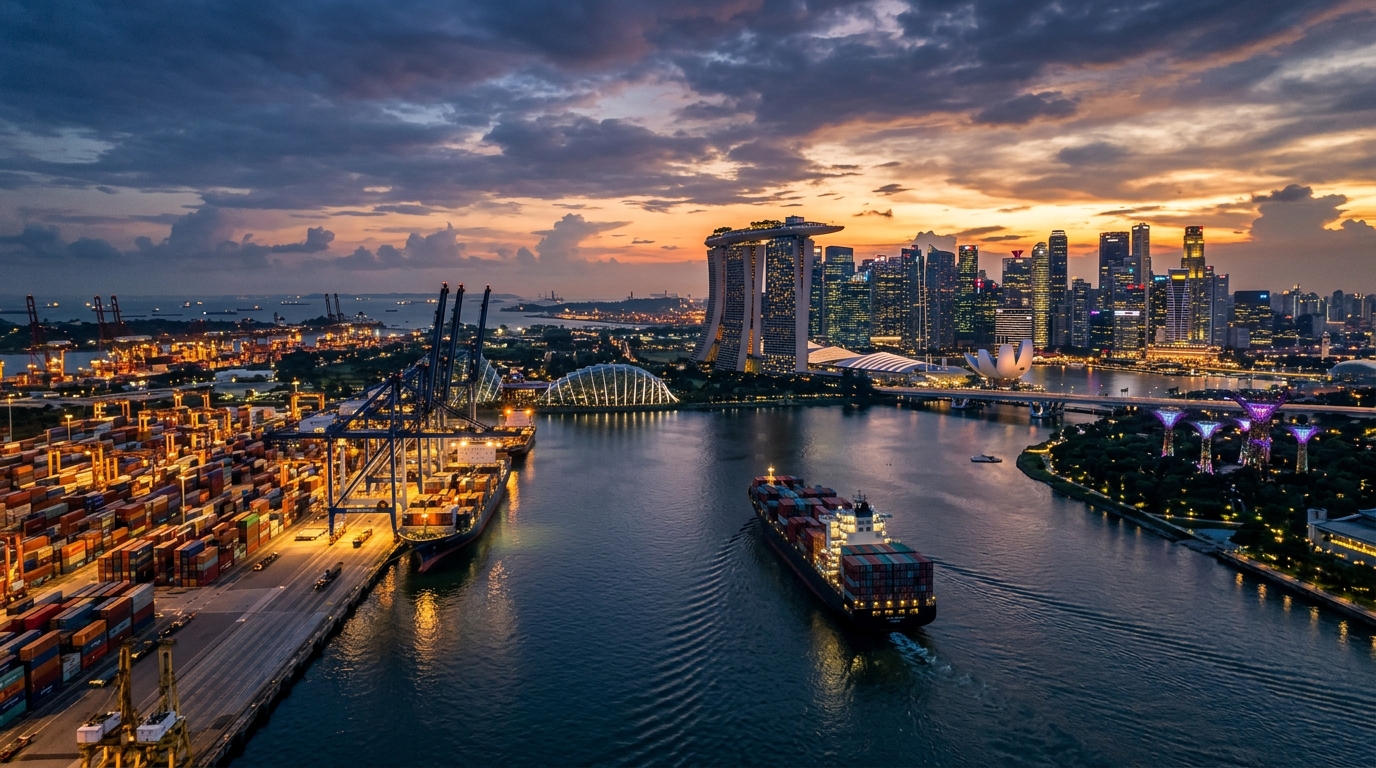
When Singapore separated from the Malaysian Federation in 1965, it possessed virtually no natural resources, a fragmented domestic market, and soaring unemployment. Decades later, the island nation boasts a GDP per capita surpassing $85,000, ranking among the world’s most prosperous, stable, and competitive economies. As African leaders seek structural transformations under the African Continental Free Trade Area (AfCFTA), Singapore’s economic journey offers practical lessons in governance, industrial targeting, and human capital development.
The Core Engines of Singapore’s Development
Singapore’s transition from a resource-scarce post-colonial port to a tier-one financial and technological powerhouse rested on deliberate statecraft. Championed by founding Prime Minister Lee Kuan Yew, the state established the Economic Development Board (EDB) in 1961 to act as a one-stop facilitator for international capital. Rather than pursuing import-substitution strategies popular among developing nations at the time, Singapore integrated itself aggressively into global supply chains.
The city-state constructed its model around four non-negotiable pillars:
- Institutional Integrity: Absolute intolerance for public corruption, anchored by rigorous institutional oversight and competitive, market-benchmarked civil service salaries.
- Strategic State Capitalism: Efficient state-owned enterprises—known as Government-Linked Companies (GLCs)—managed through commercial arms like Temasek Holdings and the sovereign wealth fund GIC, operating with market discipline rather than political patronage.
- World-Class Infrastructure: Sustained investment into intermodal transport hubs, notably the Port of Singapore and Changi Airport, transforming geography into an insurmountable logistical advantage.
- Human Capital Alignment: Continuous adaptation of technical and vocational education curricula to anticipate shifts in global industry, from electronics manufacturing to fintech and biotechnology.
Overcoming the 'Resource Curse': A Contrast in Priorities
Much of Africa’s modern economic landscape stands in stark contrast to Singapore's starting conditions. The African continent holds roughly 30 percent of the world’s mineral reserves, 8 percent of global natural gas, and 12 percent of oil reserves. Yet, reliance on raw commodity exports has repeatedly exposed African economies to boom-and-bust commodity cycles and currency volatility, commonly referred to as Dutch Disease.
Singapore’s absolute lack of oil, metals, or arable agricultural land forced its leadership to treat human talent and administrative efficiency as its primary resources. For African nations—such as Nigeria, Angola, and the Democratic Republic of Congo—the lesson is transparent: resource endowments generate windfall revenues, but long-term wealth depends on structural value addition, transparent sovereign asset management, and domestic processing capabilities.
Translating the Singapore Playbook into African Realities
Replicating Singapore’s centralized urban model across vast, diverse federal nations is neither realistic nor desirable. However, specific institutional mechanisms can be adapted to foster continental growth:
1. Bureaucratic Streamlining and Regulatory Predictability: Capital allocators routinely bypass high-yield African projects due to regulatory unpredictability and bureaucratic red tape. Streamlining investment agencies into high-authority, transparent bodies modeled on Singapore's EDB would significantly reduce the risk premium on African investments.
2. Special Economic Zones (SEZs) with Integrity: While Africa is home to hundreds of special economic zones, many remain underperforming due to inadequate transport connections, erratic power supply, and lingering customs bottlenecks. Singapore used Jurong Island to build a plug-and-play petrochemical hub; African SEZs must similarly guarantee uninterrupted utilities, clear property rights, and seamless customs operations to attract genuine industrial manufacturing.
3. Regional Logistics Integration: Just as Singapore leveraged its position in the Strait of Malacca to serve Southeast Asia and the wider globe, African transit hubs—such as Djibouti, Mombasa, Tangier Med, and Walvis Bay—can act as primary engines for regional trade under the AfCFTA framework.
The Path Ahead
Singapore’s ascent demonstrates that destiny is not dictated by geography, natural wealth, or historical deficits. While African governments navigate unique demographic explosions and political pluralities, the foundational elements of Singapore's playbook—institutional discipline, investments in trade facilitation, and strategic talent development—remain the most reliable foundation for durable economic autonomy.