
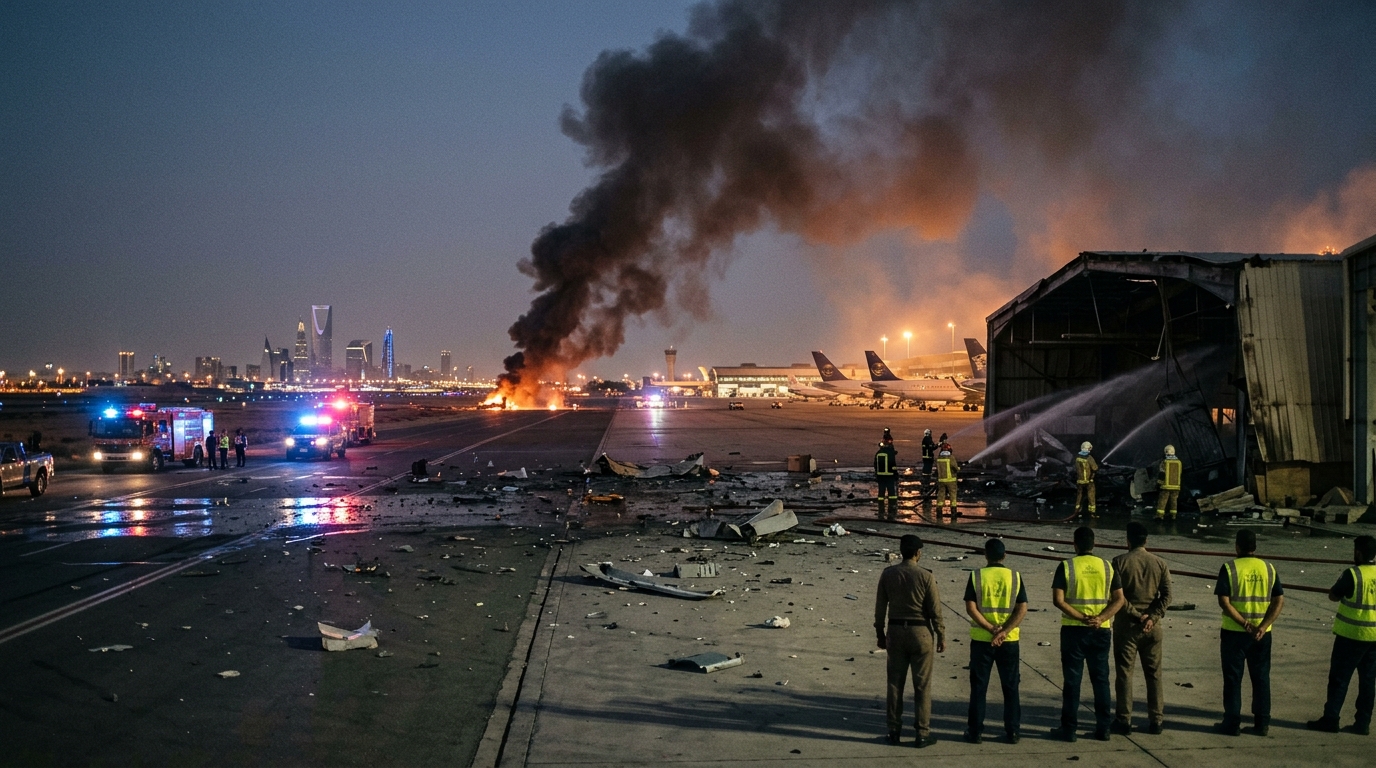
A devastating missile and drone strike on King Khalid International Airport in Riyadh has left at least 12 people dead and 309 wounded, marking the deadliest assault inside Saudi borders in over a decade. The Saturday attack, the third targeting the capital's primary aviation hub in a single week, signals a dramatic escalation by Yemen's Houthi movement and underscores the complete unraveling of regional diplomatic detente.
A Severe Breach in Capital Air Defenses
According to Saudi civil aviation authorities, the dead include four Saudi nationals, two Bangladeshi citizens, and nationals from the United States, Jordan, Palestine, Syria, Sudan, and Egypt. Emergency facilities across Riyadh were overwhelmed as medical helicopters and fleets of ambulances transferred hundreds of shrapnel and blast victims from the terminal area.
Eyewitnesses described catastrophic structural damage near an international departure gate, where falling ceiling sections crushed travelers following an unannounced blast. Crucially, Saudi Arabia's layered air defense network failed to issue an alert prior to impact, exposing glaring blind spots against low-altitude munitions and loitering drones. Earlier strikes in the week had already damaged a commercial airliner on the tarmac, but Saturday's breach paralyzed the facility entirely, forcing all inbound flights to divert and grounding international traffic serving the metropolitan area of eight million people.
From Frozen Conflict to Regional Escalation
The strikes follow the definitive collapse of the United Nations-brokered truce established in 2022, which had paused active hostilities between Riyadh and the Houthis. Tensions resumed this summer when Houthi fighters executed an offensive securing strategic coastal sectors along the Bab el-Mandeb strait—one of the world's most critical maritime energy corridors—while placing Yemen’s third-largest city, Taiz, under renewed siege.
In response, the Saudi-backed Presidential Leadership Council in Yemen launched a counter-offensive to reclaim lost ground along the Red Sea. The Houthis retaliated by declaring Saudi airspace an active combat zone, warning global carriers that civilian infrastructure would be treated as operational targets.
Economic Ambitions and Diplomatic Repercussions
The timing of the bombardment strikes at the heart of Saudi Arabia’s economic diversification roadmap. Riyadh is preparing to host marquee international energy, finance, and investment summits aimed at securing foreign capital for Vision 2030 projects. Repeated strikes on the kingdom’s premier international hub threaten foreign direct investment confidence and raise commercial aviation risk premiums across the Persian Gulf.
In Washington, President Donald Trump indicated that the administration is actively evaluating retaliatory joint military strikes alongside Saudi forces, while Secretary of State Marco Rubio condemned the operation as a flagrant assault on civilian lives. With coalition forces vowing an uncompromising response, the Arabian Peninsula stands on the brink of an intense, expanded theater of war.