
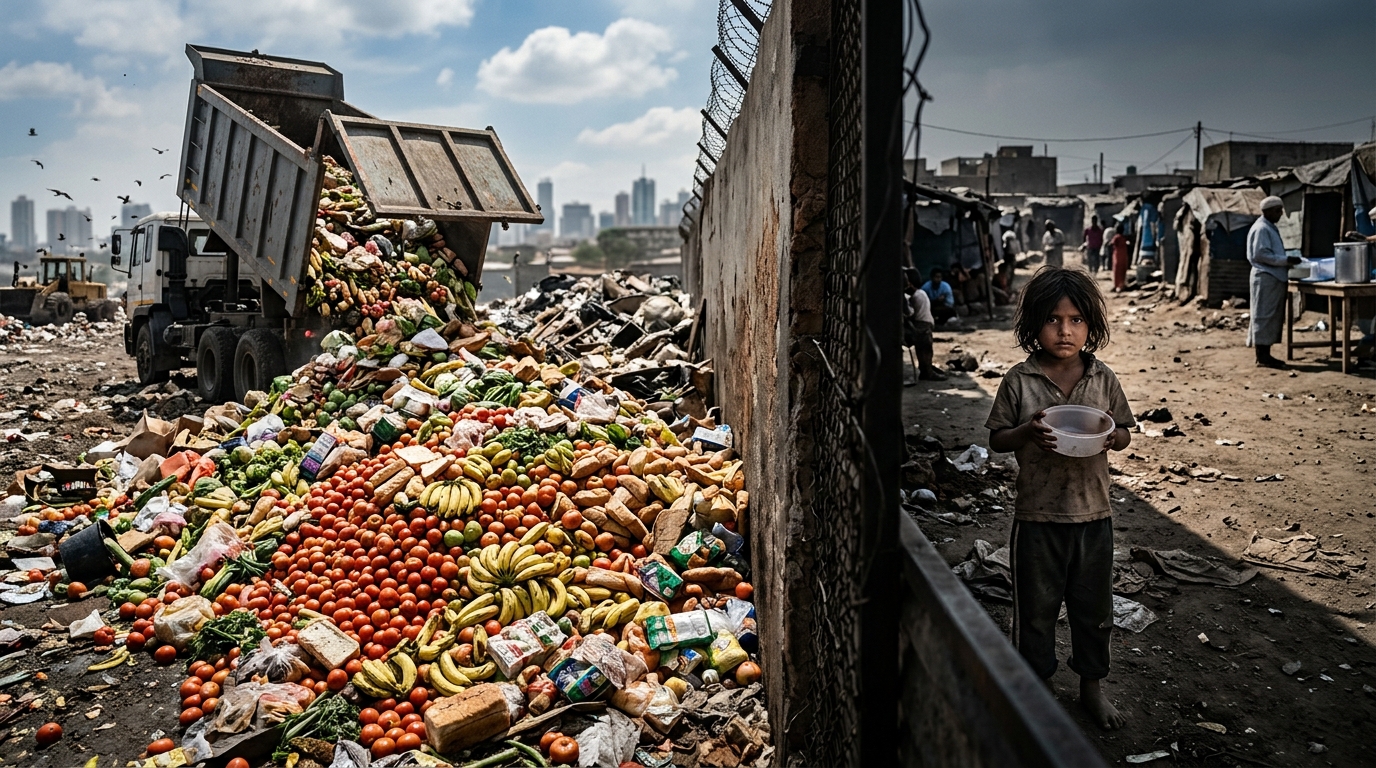
Roughly one out of every five plates of food prepared around the globe ends up discarded, translating to more than one billion tonnes of viable sustenance thrown away each year. At the same time, the United Nations estimates that 645 million people (nearly 8 percent of humanity) suffer from chronic undernourishment. While global hunger figures have edged down slightly from a post-pandemic peak of 8.6 percent in 2022, the disparity between food production and caloric equity remains one of modern economics' most glaring failures.
The African Hunger Crisis and Systemic Supply Chain Leaks
The geography of malnutrition remains deeply unbalanced. Africa bears the heaviest burden, home to roughly 309 million undernourished people—nearly half of the worldwide total. In nations like Somalia, Chad, and the Democratic Republic of the Congo, climate-induced shocks, conflict, and economic volatility have pushed hunger indicators to alarming heights.
Yet, food is not scarce because the earth fails to yield enough. Instead, systemic leakages undermine food security long before dinner tables are set. According to the Food and Agriculture Organization (FAO), approximately 13 percent of all food harvested spoils before it ever reaches markets, primarily due to deficient refrigeration, substandard rural transit routes, and inefficient warehousing. This pre-retail loss alone drains roughly $400 billion from the global economy every year, hitting perishable fruits, vegetables, and dairy hardest.
The Consumer Side: Why Warmer Climates Face Higher Losses
Once commodities reach urban centers, the locus of waste shifts decisively toward end-users. The UN Environment Programme (UNEP) calculates that households generate roughly 60 percent of consumer-level food waste, with food service operators accounting for 28 percent and supermarkets contributing the remaining 12 percent. Worldwide, the average individual discards around 79 kilograms of food at home each year.
Per capita waste figures spike significantly in hotter regions where cold-chain logistics are patchy and fresh, unpackaged ingredients dominate daily commerce. Countries such as the Maldives, Syria, and Tunisia record domestic waste volumes exceeding 200 kilograms per resident annually, whereas countries with robust cold distribution infrastructures and strict packaging standards, such as Spain, report domestic losses under 40 kilograms per person.
Morocco: The Hidden Cost of Food Waste Amid Historic Drought
In North Africa, Morocco illustrates the acute environmental and economic friction created by domestic food waste. According to data from the UNEP Food Waste Index, Moroccan households squander approximately 113 kilograms of food per capita annually. Across the entire kingdom, this domestic habit adds up to an estimated 4.2 million tonnes of food discarded each year.
This volume represents not merely lost nutrition, but an alarming squandering of strained national resources. Morocco is grappling with its sixth consecutive year of severe drought, which has depleted strategic reservoirs like Al Massira to record lows and forced deep irrigation cuts for domestic farmers. In essence, discarding food in Morocco equates to dumping subsidized, scarce groundwater down the drain.
Sociocultural dynamics compound the issue. Agronomic surveys conducted by Moroccan research bodies show that food disposal surges dramatically during festive periods, most notably the holy month of Ramadan, when household food purchases increase by nearly 50 percent, and an estimated one-third of prepared dishes—dominated by subsidized flatbreads (khobz), pastries, and vegetable stews—end up in municipal landfills.
The Ecological Footprint and Systemic Remedies
Beyond moral and financial dilemmas, the broader toll on planetary systems is staggering. Food loss and waste generate between 8 and 10 percent of total anthropogenic greenhouse gas emissions, predominantly in the form of potent methane venting from decaying landfills. Moreover, producing food that is never eaten occupies 1.4 billion hectares of agricultural land—an area larger than Canada.
Addressing the crisis demands practical, systemic recalibrations alongside domestic habit changes:
- Modernizing Cold-Chain Logistics: Directing public and private investments into decentralized solar-powered cold storage hubs across rural agricultural zones cuts post-harvest spoilage where it is highest.
- Clarifying Date Labels: Standardizing the regulatory difference between strict "Use By" safety dates and commercial "Best Before" quality markers prevents unnecessary wholesale binning by retailers and shoppers alike.
- Decoupling Cultural Excess from Waste: Community-level awareness initiatives, targeted especially at hospitality providers and urban households during high-consumption holidays, can redirect edible surplus through formal food banks and redistribution networks.
- Municipal Organics Diversion: Implementing regional composting strategies keeps unpreventable organic waste out of municipal dumps, mitigating methane production and yielding nutrient-rich soil additives for depleted farmlands.