
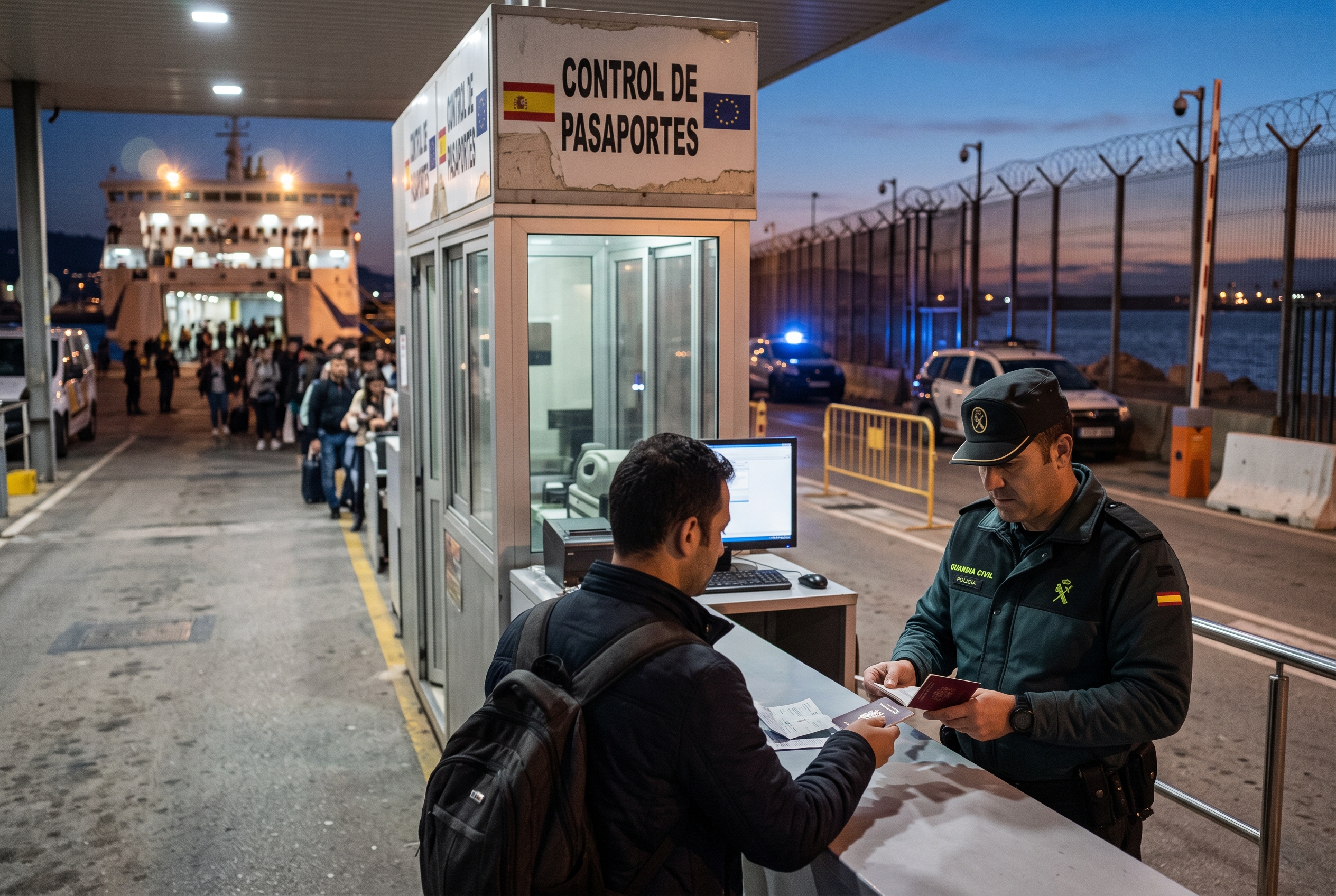
Spain is extending its border checks for people arriving from Italy by plane or ship. These temporary controls will now last until October 22 to help manage migration and protect national security.
Spain Extends Border Checks for Travelers from Italy Amid Ceuta Migration Crisis
The checks were originally supposed to end on October 7, but the Spanish Ministry of the Interior added another 15 days. This is the third time Spain has extended the rule since it began on August 8. The policy does not close the border completely; it only applies to direct flights and ferries arriving from Italian airports and ports.
The Spanish government says these checks are necessary to protect public order. They are mainly concerned about the high number of migrants crossing the Central Mediterranean into Italy and then traveling illegally to other European countries, including Spain.
This tension is directly tied to a massive migration crisis that happened in late July at the Spanish enclave of Ceuta. On July 30 and 31, approximately 72,000 people crossed the border from Morocco into Ceuta in a very short time. Following this event, Italy started checking travelers coming from Spain. In response, Madrid introduced its own checks on travelers arriving from Italy on August 8.
The consequences of the massive border crossing are still highly visible in Ceuta. Recent estimates show that over 3,000 migrants, including hundreds of children, are still living on the streets. Spanish authorities will keep monitoring the situation. If conditions improve, they might cancel the border checks before the October 22 deadline.
Background Information: The Political Role of Ceuta and Migration
To understand why a migration crisis in Ceuta impacts international relations between Spain, Italy, and Morocco, it helps to know the unique political situation in the region:
Europe's Only Land Border in Africa:
Ceuta (along with Melilla) is a Spanish city located on the northern coast of Morocco. Because it is Spanish territory, stepping into Ceuta means stepping into the European Union. This makes it a major target for migrants trying to reach Europe.
A Disputed Territory:
Spain considers Ceuta a historic and permanent part of its country. However, Morocco does not recognize Spanish rule over the city and considers it occupied Moroccan territory.
Migration as a Political Tool:
Morocco usually guards its side of the border very strictly, stopping migrants from crossing into Ceuta. However, when the Moroccan government has a political dispute with Spain—often regarding financial aid, EU trade agreements, or Spain's stance on the disputed Western Sahara region—Moroccan border guards sometimes stop enforcing the rules. This allows sudden, massive waves of migrants to cross into Spain, creating immediate political and humanitarian pressure for the Spanish government.
The European Domino Effect:
When Spain is suddenly overwhelmed by migrants entering through Ceuta, many of those migrants try to move onward to other European countries. This causes a chain reaction, leading countries like Italy and Spain to temporarily close or strictly monitor their internal European borders (the Schengen area) to stop the flow of undocumented people.