
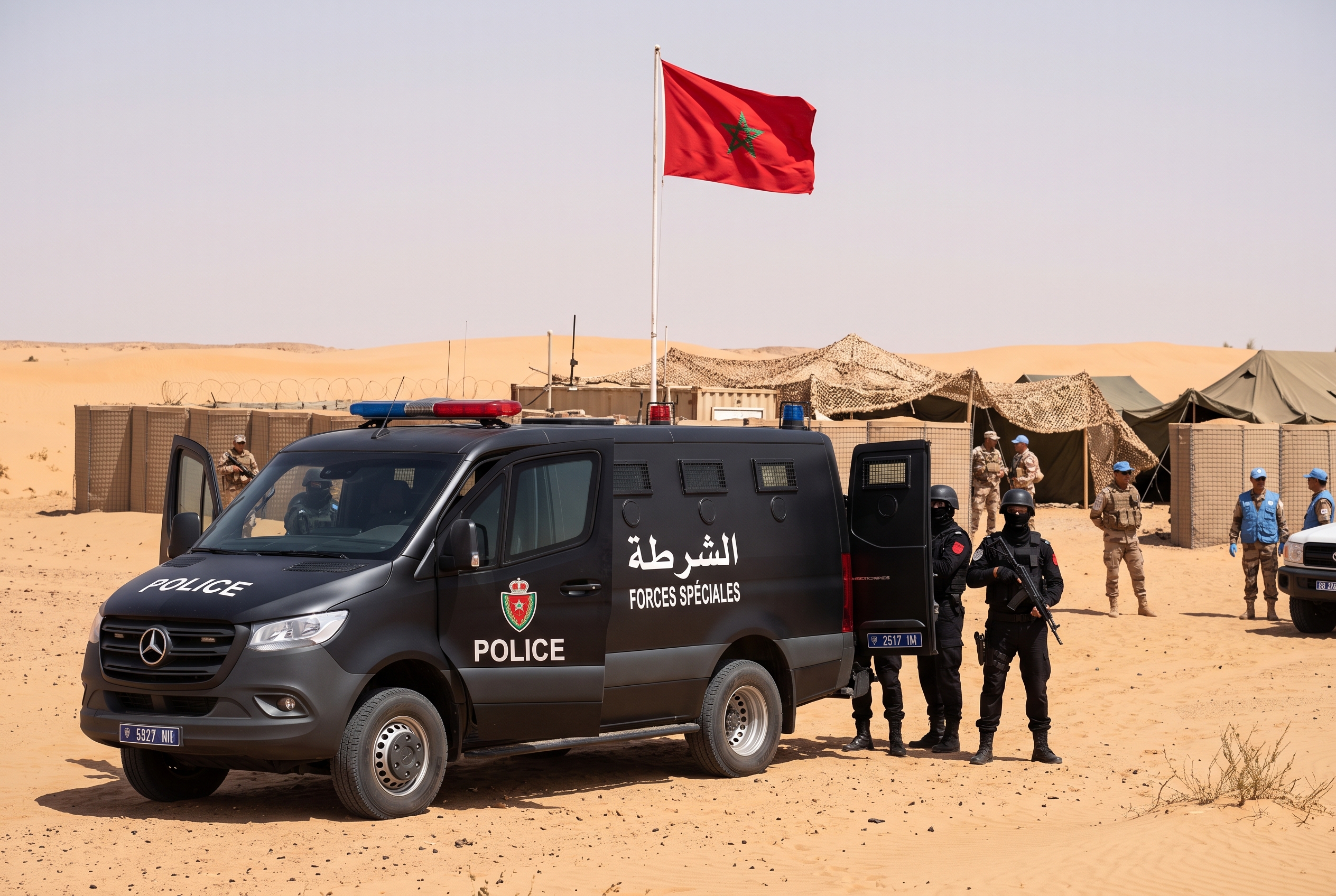
According to a recent United Nations report, Morocco has successfully cleared nearly 269 million square meters of landmines and explosive remnants of war (ERW) in the Sahara over the past year. The Royal Moroccan Armed Forces (FAR) destroyed hundreds of explosive devices, significantly advancing regional safety and accessibility.
The data, featured in the latest report by UN Secretary-General António Guterres regarding the MINURSO mission, covers the period from October 1, 2025, to September 30, 2026. The clearing operations were primarily conducted west of the 1,465-kilometer sand berm that divides the region.
Based on figures provided by Morocco to the UN, the operations neutralized 44 anti-personnel mines, five anti-tank mines, and 264 other explosive devices. These efforts are part of a broader initiative to restore safe access to territories still contaminated by unexploded ordnance—largely a legacy of the 1975–1991 conflict.
UNMAS Operations East of the Berm
Demining activities also progressed east of the berm. The United Nations Mine Action Service (UNMAS) executed 1,330 missions during the reporting period, primarily to secure the movement of MINURSO personnel and logistical convoys. By mid-August, over 12,400 kilometers of roads were surveyed and verified as free of visible explosives.
Furthermore, UNMAS cleared nearly 1.8 million square meters of land and verified an additional 374 kilometers of routes to grant MINURSO investigators access to sites of reported attacks.
Ongoing Hazards and Humanitarian Impact
Despite this significant progress, the UN cautions that substantial hazards remain. As of mid-August, 24 out of 68 known minefields east of the berm still required intervention, along with 31 of the 543 recorded cluster munition strike areas. Since October 2025, UNMAS has located and destroyed one landmine, 135 cluster munitions, and six other explosive remnants in this sector, while also discovering a previously unrecorded minefield.
These remnants continue to pose a severe risk to civilians, nomadic communities, UN personnel, and livestock. Since the inception of the UN program in 2008, over 84 million square meters of hazardous terrain have been cleared. Tragically, more than a thousand mine-related casualties have been recorded east of the berm over the years.
Security Challenges and Diplomatic Developments
The UN report also highlights persistent security challenges in the region. On May 5, an attack in Es-Smara—claimed by the Polisario Front—resulted in three projectile strikes, leaving one civilian injured and causing property damage. Following the incident, UN Envoy Staffan de Mistura and the United States issued strong warnings against further military escalation.
These security concerns arise amidst renewed efforts to revive stalled peace negotiations. During the first quarter of 2026, three rounds of discussions took place involving Morocco, the Polisario Front, Algeria, and Mauritania. According to the UN report, these talks involved comprehensive discussions on potential transitional arrangements, autonomy, self-determination, security protocols, and the equitable distribution of natural resources.
In light of these ongoing developments, Secretary-General Guterres has advised the UN Security Council to extend MINURSO's mandate for an additional year, until October 31, 2027. He emphasized that the mission remains essential for investigating incidents, facilitating diplomatic dialogue, and preventing any further escalation of hostilities.