
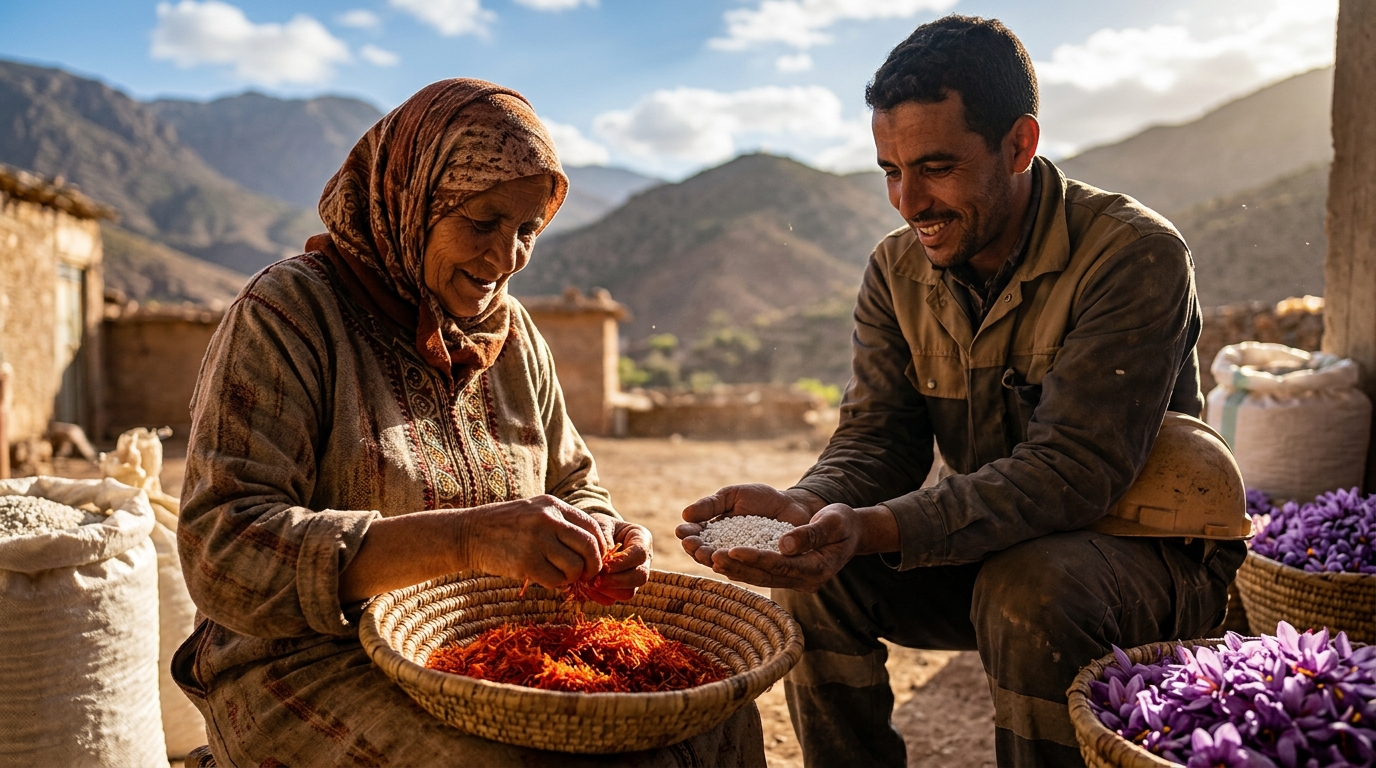
While global markets routinely track saffron prices climbing beyond thousands of euros per kilogram due to intricate harvesting and geopolitical constraints on traditional suppliers like Iran, an agricultural and economic shift is gaining momentum in the Anti-Atlas mountains of Morocco. In regions like Taliouine, saffron—widely known as 'red gold'—is no longer merely a subsistence crop; it has become a springboard for domestic entrepreneurship and strategic agricultural industrialization.
Value Retention and Grassroots Entrepreneurship
Historically, raw agricultural commodities yield the lowest margins at the point of origin, with international intermediaries capturing downstream value through packaging, certification, and distribution. In Morocco, this dynamic is changing. Local Berber communities and female-led cooperatives are increasingly taking control of the entire value chain. By pursuing ISO 3632-2 certification, acquiring Protected Designation of Origin (PDO) status, and deploying direct-to-consumer digital channels, local producers are bypassing speculative middlemen.
Entrepreneurs in Agadir, Taroudant, and Casablanca are launching high-margin product lines extending beyond gourmet culinary stigmas. Saffron-infused cosmetics, pharmaceutical extracts, and functional beverages represent lucrative frontiers that convert rural botanical output into sustainable regional employment and foreign currency inflows.
The Strategic Synergy: Crocus Sativus and Phosphate Innovation
Morocco's long-term agricultural edge lies at the crossroads of saffron cultivation and its sovereign mineral asset: phosphate. Holding over 70% of the world’s phosphate reserves, Morocco, primarily through the state-backed OCP Group, is pioneering precision agronomy tailored for semi-arid zones.
- Precision Soil Nutrition: Saffron corms (Crocus sativus) require balanced potassium and phosphorus levels to maximize flowering yields without depleting vulnerable soils. Tailored, phosphate-based smart fertilizers are optimizing bulb reproduction rates.
- Water Efficiency and Infrastructure: Revenues and research derived from the phosphate sector support modern drip-irrigation networks, mitigating the erratic rainfall patterns characteristic of southern Morocco.
- Sustainable Scale: Combining advanced soil science with cooperative farming allows Moroccan saffron growers to boost yields per hectare organically, meeting demanding European certification standards (such as Ecocert).
By blending traditional harvesting techniques with institutional phosphate expertise and entrepreneurial logistics, Morocco is positioning itself not just as an alternative producer to Iran or Spain, but as a sovereign powerhouse of high-value, climate-adapted agro-exports.