
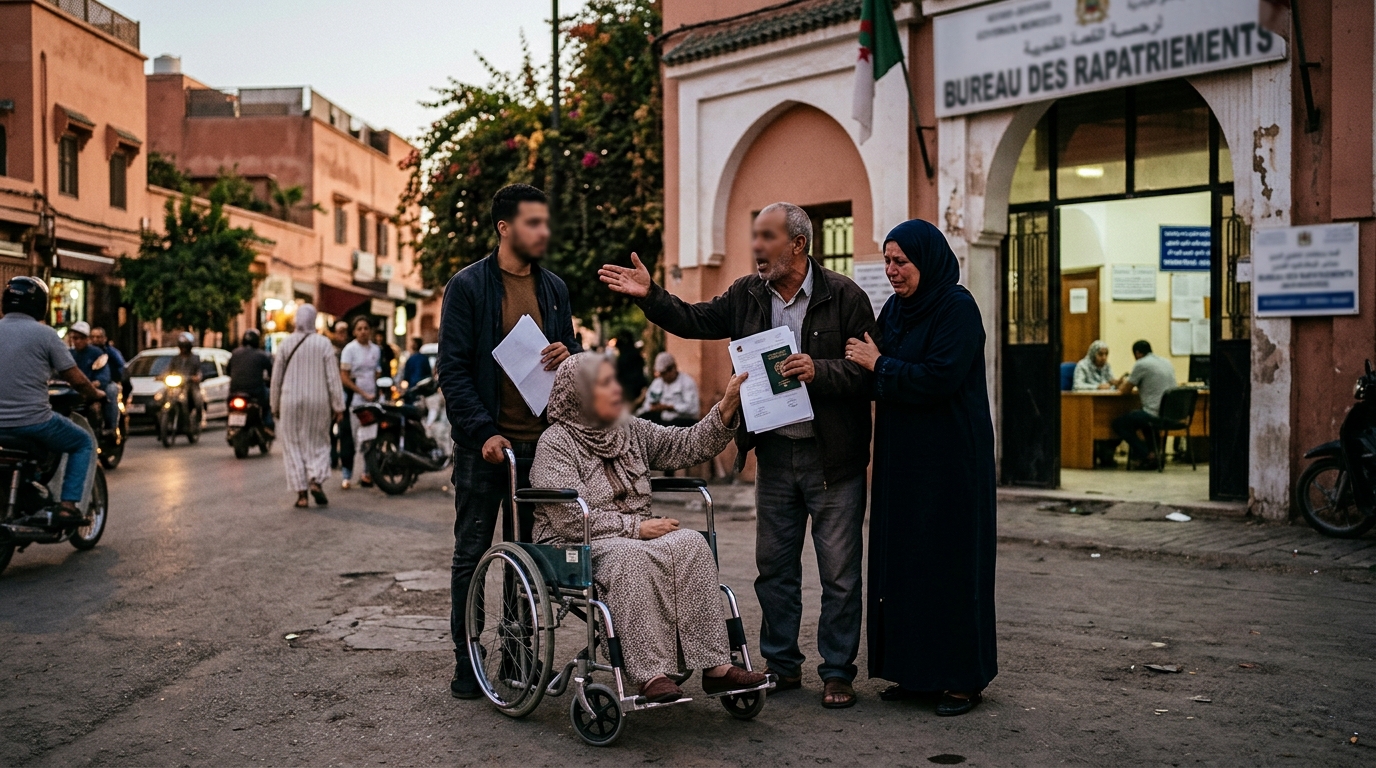
A holiday in Morocco ended in profound grief and outrage for the family of 72-year-old Dutch national Ad van Til. The retiree from Helmond passed away in a Marrakesh hospital on a Thursday evening after spending nearly a week stranded in medical limbo. His family alleges that bureaucratic delays, repeated communication breakdowns, and misfiled paperwork at medical assistance coordinator SOS International directly obstructed a critical emergency repatriation flight that would have brought him home to the Netherlands for his final days.
A Sudden Turn of Health Far From Home
What was intended to be a relaxing getaway for Ad and his wife took an alarming turn during their stay at a Marrakesh resort. Experiencing growing discomfort and severe respiratory distress shortly before their scheduled return flight, Van Til was admitted to a local hospital. Clinical scans indicated suspected advanced lung cancer, prompting immediate decisions to abort the holiday and secure aeromedical transport back to the Netherlands so specialized treatment could begin without delay.
By the following day, local physicians issued a formal 'fit-to-fly' certification confirming that Van Til was stable enough to be evacuated under medical supervision. The hospital refrained from initiating invasive oncological interventions, anticipating that his insurer, Nationale-Nederlanden, and its operational emergency response service, SOS International, would execute a swift transfer. Instead, the family found themselves caught in an agonizing communication loop.
Administrative Stagnation Amid Escalating Crisis
Family members reported contacting SOS International between six and eight times a day. Rather than receiving coordinated logistical support, they described an exhausting ordeal where vital medical records, clinical scans, and personal documentation had to be repeatedly resubmitted. Desperate to circumvent the paralysis, the family even obtained private quotes—finding that a private air ambulance service could have flown Van Til home within 48 hours for approximately €37,000—yet the formal insurance framework remained locked in administrative gridlock.
The critical bottleneck emerged on Thursday when an assistance coordinator finally recognized that essential medical clearance forms had been logged in the wrong section of Van Til’s digital dossier since earlier in the week. By the time the misfiled paperwork was addressed, Van Til suffered acute renal failure. He passed away that evening with his wife and grandson by his side, hundreds of miles from his home city.
The Critical Role of International Emergency Assistance
The tragedy sheds an uncomfortable light on the high-stakes, opaque operations of international medical assistance providers. Global entities in this sector—most prominently International SOS, founded in 1985 by Dr. Pascal Rey-Herme and Arnaud Vaissié—form the invisible backbone of cross-border emergency medicine. Worldwide, such organizations operate extensive 24/7 assistance centers across roughly 90 countries, processing millions of distress calls annually, deploying thousands of medical personnel, and managing complex aeromedical transfers ranging from corporate relocations to urgent intensive care repatriations.
However, the operational pipeline required to authorize an international air ambulance involves intricate layers of risk management. Emergency assistance companies do not solely rely on foreign attending physicians; their own internal flight physicians must validate that high-altitude atmospheric changes, cabin pressurization, and emergency equipment onboard will not trigger fatal decompensation during transit. While designed to protect patient safety, this multi-tiered vetting protocol can create severe disconnects when local hospital diagnoses rapidly shift or when administrative errors stall real-time evaluation.
Accountability and the Unresolved Aftermath
In response to the incident, SOS International expressed condolences and stated that individual medical dossiers cannot be publicly disclosed due to confidentiality rules. A spokesperson emphasized that repatriation decisions require rigorous assessments of both medical necessity and transportation safety, noting that a local fit-to-fly certificate is only one component of their evaluation. The organization pledged to conduct a thorough joint evaluation with the family once Van Til's body is returned, while insurer Nationale-Nederlanden declined to comment independently, redirecting all inquiries to the emergency dispatch provider.
For the Van Til family, institutional investigations offer little comfort. Even after his death, relatives encountered persistent uncertainty surrounding mortuary protocols, legal export filings, and passport custody. Their focus remains fixed on bringing his remains back to Helmond to arrange a dignified burial, while pushing for systemic transparency so other traveling families are spared the devastating consequences of administrative paralysis during medical emergencies.