
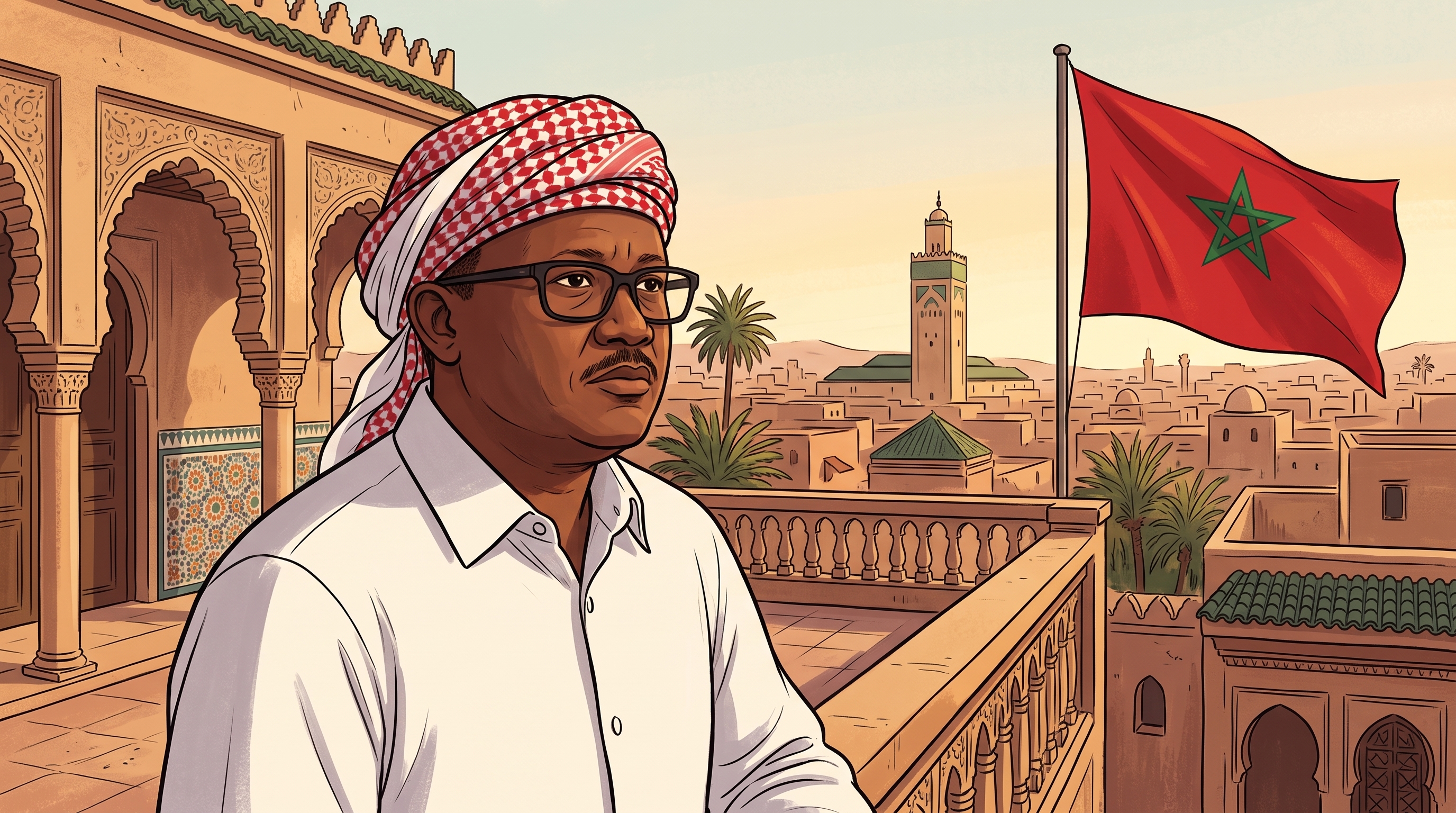
Former President Umaro Sissoco Embaló's highly anticipated return to Guinea-Bissau was abruptly halted on Sunday, October 4, after the ruling military junta barred his entry. Currently living in exile in Morocco, Embaló remains fiercely determined to contest the upcoming presidential elections on December 6, despite the junta's explicit prohibition.
The military high command justified the travel ban by citing national security concerns, maintaining that the necessary conditions for a safe return have not been met. According to the authorities, this preventative measure is crucial to preserving public order and mitigating the risk of renewed political instability. Consequently, the armed forces have also announced stringent restrictions on political gatherings and public demonstrations throughout the current transitional period.
Embaló, a former army general and prime minister, governed Guinea-Bissau from February 2020 until his dramatic ousting in November 2025. During his nearly six-year tenure, his administration frequently navigated deep institutional crises and survived earlier military uprisings. His presidency was ultimately cut short by last year's coup d'état, which unfolded shortly after a disputed presidential election where both Embaló and his primary challenger claimed victory before official results could be validated.
Despite the border closure, the ousted leader refuses to concede his political future. From his Moroccan sanctuary, Embaló has instructed his supporters—who were already mobilizing for his arrival—that his candidacy stands. He has formally appealed to the judicial authorities to independently evaluate and approve his electoral bid.
The military leadership has positioned the December 6 elections as a critical stepping stone toward restoring civilian rule. However, the country's political framework has fundamentally shifted; a controversial referendum passed in August introduced a revised constitution that significantly expands executive presidential powers while reducing the size of the national parliament.
Whether Embaló can legally or logistically participate in the race while locked out of his own country remains highly uncertain. The military has not published any independent risk assessments detailing the specific threats his presence would supposedly trigger, relying solely on its own security mandate to enforce the travel ban.
Meanwhile, Morocco has maintained a strictly neutral diplomatic posture. The Kingdom has refrained from public commentary regarding Embaló's political aspirations or the junta's border restrictions, serving exclusively as a host nation for the displaced leader since his deposition. As the election date rapidly approaches, the geopolitical standoff intensifies: a determined former president actively campaigning from abroad, up against a fortified border controlled by the very forces that orchestrated his downfall.