
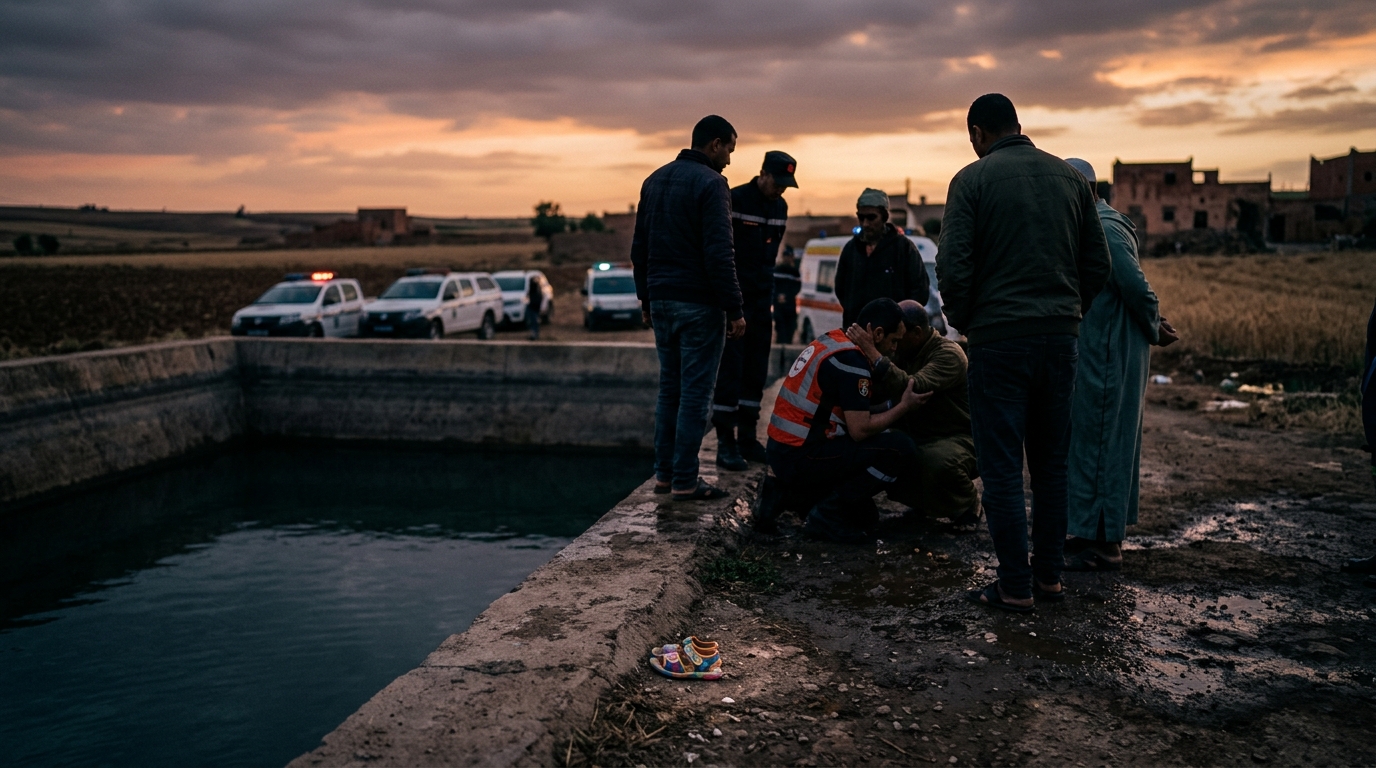
A community in Morocco's western plains was plunged into mourning on Wednesday following the tragic discovery of a five-year-old boy's body inside an agricultural irrigation basin in the rural commune of Al-Ghiyath, located within the Safi province. Emergency response teams, comprising personnel from the Civil Protection and the Royal Gendarmerie, were dispatched to the site early Wednesday morning to recover the child from the water reservoir.
Official Inquest and Medical Examination Underway
Following the recovery operation, the child's body was transferred to the morgue at the Mohammed V Provincial Hospital in Safi. Under the instructions of the competent public prosecutor's office, forensic specialists have been tasked with conducting an autopsy to determine the precise medical cause of death and establish whether foul play or accidental slippage was involved. The Royal Gendarmerie launched an immediate investigation into the circumstances surrounding how the unaccompanied minor gained access to the basin.
The Proliferation of Agricultural Basins Amid Chronic Drought
The tragedy in Al-Ghiyath highlights a recurring public safety challenge across agricultural zones in Morocco. Over recent years, prolonged nationwide droughts and declining water tables have accelerated the construction of private water retention basins. Backed by state incentives under agricultural modernization strategies, thousands of farmers have excavated open-air reservoirs lined with high-density polyethylene (HDPE) membranes to facilitate localized drip irrigation and manage scarce groundwater resources.
While vital for agricultural continuity in regions such as Safi, Marrakech-Safi, and the Souss, these reservoirs present severe hazards when left uncovered or unsecured:
- Steep, Slick Geometry: Plastic lining becomes virtually frictionless when wet or moss-covered, creating an insurmountable barrier for anyone who falls in without immediate access to fixed exit ladders or flotation ropes.
- Lack of Physical Enclosures: Significant numbers of rural farm plots fail to maintain basic perimeter fencing, leaving high-capacity reservoirs directly exposed to children and stray livestock.
- Isolation and Minimal Surveillance: Remote farmland locations often mean that accidents occur far from prompt adult supervision or swift medical intervention.
Growing Demands for Stringent Safety Enforcement
This latest incident in Safi has reignited debates among rural development specialists and civil society actors regarding regulatory compliance. Community advocates emphasize that local authorities must systematically enforce safety bylaws governing private reservoirs, which mandate sturdy fencing, hazard warning signage, and dedicated escape infrastructure. As investigations into the young victim's death continue, the tragedy serves as a somber reminder of the hidden human costs when agricultural infrastructure expands faster than safety enforcement.