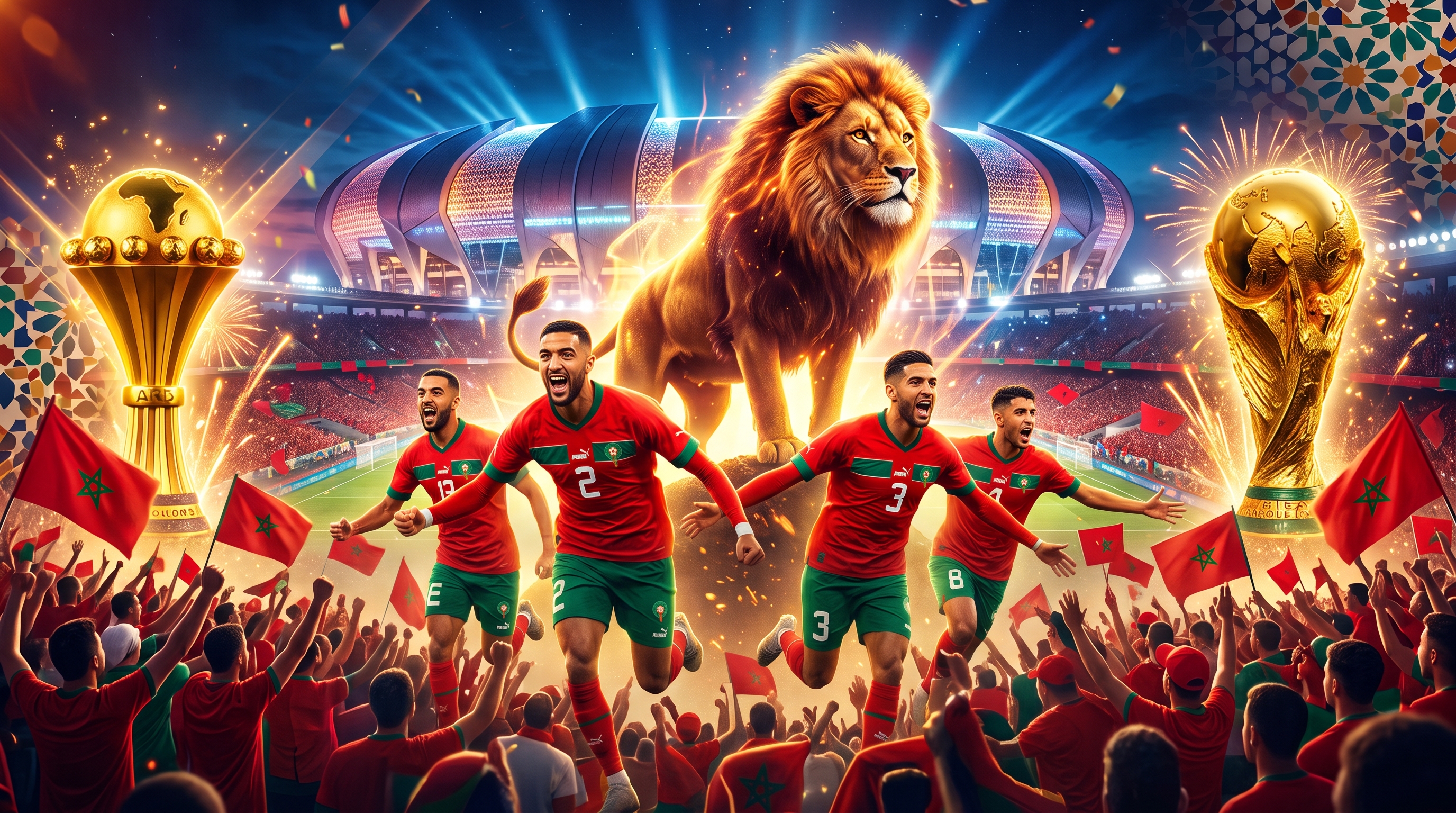
The landscape of African football is undergoing a massive geopolitical and tactical transformation, driven by infrastructure investments and long-term talent cultivation. At the heart of this evolution is Morocco, a nation establishing itself as the premier football powerhouse of the continent. From hosting major tournaments to mounting an aggressive campaign to host the 2030 FIFA World Cup Final, the Kingdom is redefining African sports ambition.
Two critical developments have highlighted Morocco's rise: a significant display of continental diplomacy from Senegal, and the tactical repositioning of the senior national team under head coach Mohamed Ouahbi ahead of the upcoming Africa Cup of Nations (AFCON).
Senegal Backs Morocco’s Bid for the 2030 World Cup Final
In a powerful demonstration of African unity, the President of the Senegalese Football Federation (FSF), Abdoulaye Fall, publicly endorsed Morocco’s campaign to host the final match of the 2030 World Cup. The tournament, co-hosted by Morocco, Spain, and Portugal, marks the first time a World Cup will span two continents.
While Spain pushes for venues like Madrid’s Santiago Bernabéu or Barcelona’s Camp Nou, Morocco is positioning the under-construction Grand Stade Hassan II in Benslimane (near Casablanca)—a mega-project designed to seat 115,000 spectators—as the definitive venue for the final.
A Unified African Front
Fall stated that securing the final in Casablanca would be "a victory for the whole of Africa". Highlighting Morocco’s elite infrastructure, security, and proven operational expertise, the Senegalese endorsement builds momentum for the continent to host its second-ever World Cup final, exactly twenty years after the historic 2010 decider in Johannesburg, South Africa.
This endorsement carries immense diplomatic weight, signaling to FIFA that Africa stands unified behind Morocco's hosting capabilities.
Mohamed Ouahbi’s Strategic Vision: Prioritizing AFCON Over FIFA Rankings
On the pitch, the Atlas Lions continue their competitive evolution under the guidance of head coach Mohamed Ouahbi. After inheriting the senior squad following Walid Regragui, Ouahbi successfully guided the team to a quarter-final finish at the 2026 World Cup. His tactical philosophy, grounded in youth transition and possession-oriented dominance, has consistently placed Morocco among the global football elite.
Following the most recent international break, Morocco briefly equaled the all-time African record by climbing to 5th in the FIFA World Rankings—a position matching Nigeria's iconic 1994 placement. However, a subsequent 1-1 friendly draw against Mali saw the team adjust slightly to 7th globally.
The Ultimate Goal: Continental Gold
Rather than focusing on volatile ranking metrics, Ouahbi remains entirely concentrated on silverware. Speaking transparently about the slight rankings drop, the manager emphasized that friendly matches and tactical experimentation serve a singular purpose: winning the Africa Cup of Nations.
"We cannot simply chase the FIFA ranking today and forget that the most important thing is to be ready to play these matches when we arrive at the Africa Cup of Nations,"
Ouahbi stated.
Having previously led Morocco to a FIFA U-20 World Cup title, Ouahbi's strategic pedigree is rooted in tournament progression rather than cosmetic statistical maintenance. His focus remains locked on maximizing team cohesion during AFCON qualification fixtures to ensure peak execution when the continental tournament begins.