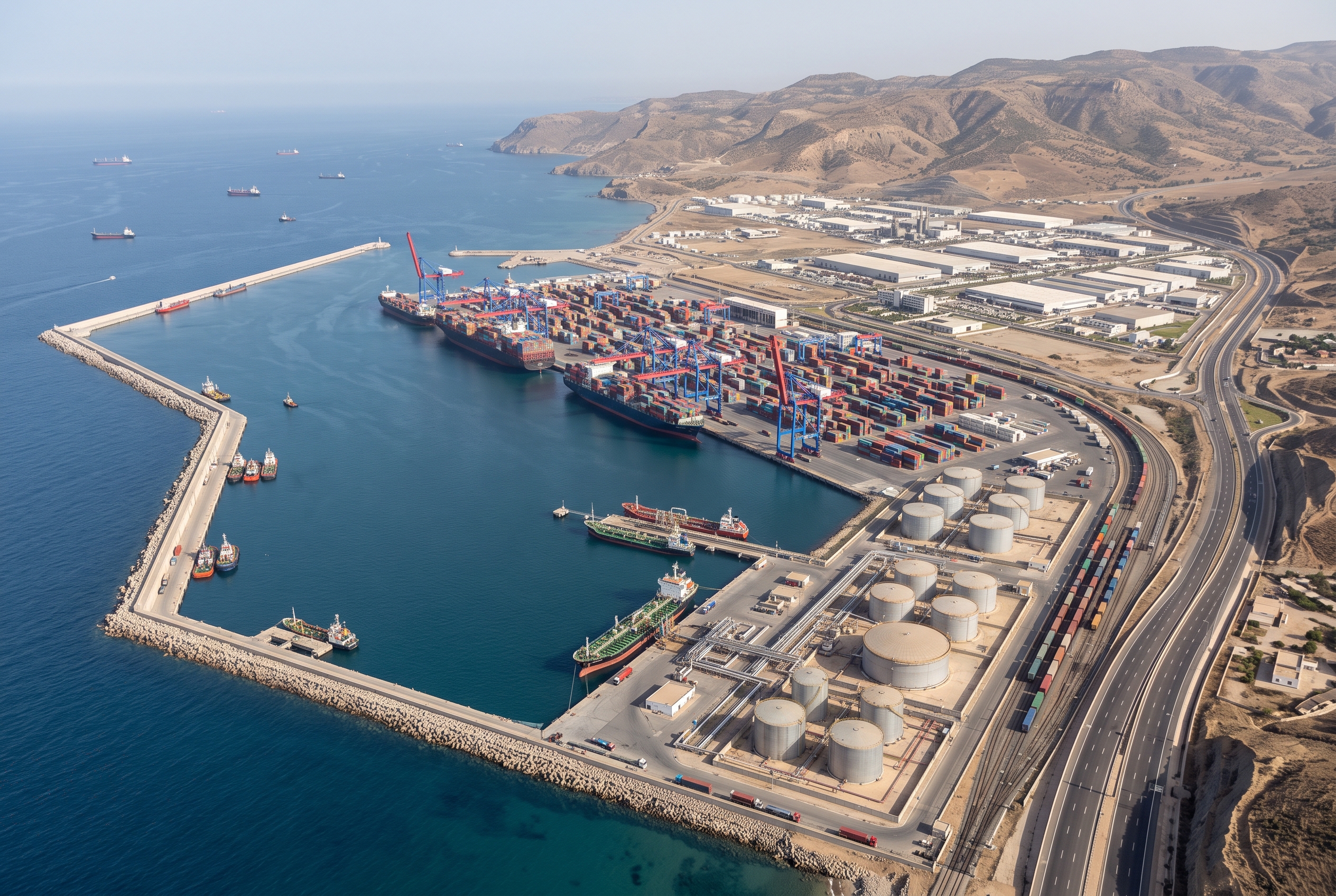
The impending completion of the $4.2 billion Nador West Med (NWM) megaport in late 2026 marks a structural shift in global maritime trade and Morocco’s domestic economy. Built on the success of Tanger Med, this deep-water port in the Betoya Bay is designed to do far more than just handle cargo. It is an integrated industrial and logistical ecosystem that will fundamentally rewrite the economic realities of Morocco’s Oriental region and solidify the country's position as the primary gateway between Europe, Africa, and the Middle East.
Here is how the completion of Nador West Med will drive Morocco's next phase of growth.
The Scale of Ambition
Nador West Med is built to absorb the overflow of global supply chains that are currently bottlenecking in the Mediterranean. Rather than directly competing with Tanger Med, it operates as a complementary powerhouse, creating a dual-hub maritime strategy that few nations can match.
Awakening the Oriental Region
For decades, Morocco’s economic growth has been heavily concentrated along the Atlantic coast between Casablanca and Tangier. Nador West Med is the anchor project designed to end the marginalization of the country’s northeast.
- Direct Job Creation: The port's construction has already employed thousands, but its operational phase will generate massive direct employment in logistics, maritime operations, and administration.
- Infrastructure Boom: The port is not an isolated facility. It is acting as a catalyst for a massive web of new infrastructure, including modern highway connections (like the Guercif-Nador highway) and upgraded rail links that will seamlessly connect the Oriental region to the rest of the country.
- Local Wealth Retention: By establishing a major economic engine in Nador, the region will retain its young talent and workforce, reducing rural exodus and lowering the local unemployment rate.
A Magnet for Foreign Investment
The port itself is only half the strategy. Adjacent to NWM, the government is developing a sprawling Free Trade Zone (FTZ) and an industrial park covering thousands of hectares.
Because Nador sits directly across from southern Europe, manufacturers can produce goods in this tax-advantaged zone and ship them to European markets within hours. This setup is highly attractive to industries requiring heavy logistics, such as automotive manufacturing, textiles, and agro-industry. Foreign Direct Investment (FDI) is expected to surge as international companies seek nearshoring opportunities—moving their production closer to Europe to avoid the supply chain disruptions associated with long-haul shipping from Asia.
The Energy Hub of Tomorrow
One of the most critical differentiators of Nador West Med is its focus on energy. The facility is equipped with dedicated terminals for hydrocarbons, positioning Morocco as a crucial storage and redistribution node for energy products in the Western Mediterranean.
Beyond fossil fuels, the port is being future-proofed for the green transition. As Morocco rapidly scales its production of renewable energy and green hydrogen, Nador West Med will serve as the primary export terminal for green ammonia and synthetic fuels bound for Europe. This aligns perfectly with the European Union's aggressive decarbonization goals, making Morocco an indispensable partner in the region's future energy security.
Morocco's economic strategy relies on physical infrastructure to command global relevance. When Nador West Med reaches full operational capacity, it will not just be a point on a shipping map; it will be a cornerstone of the nation’s modern industrial model.