
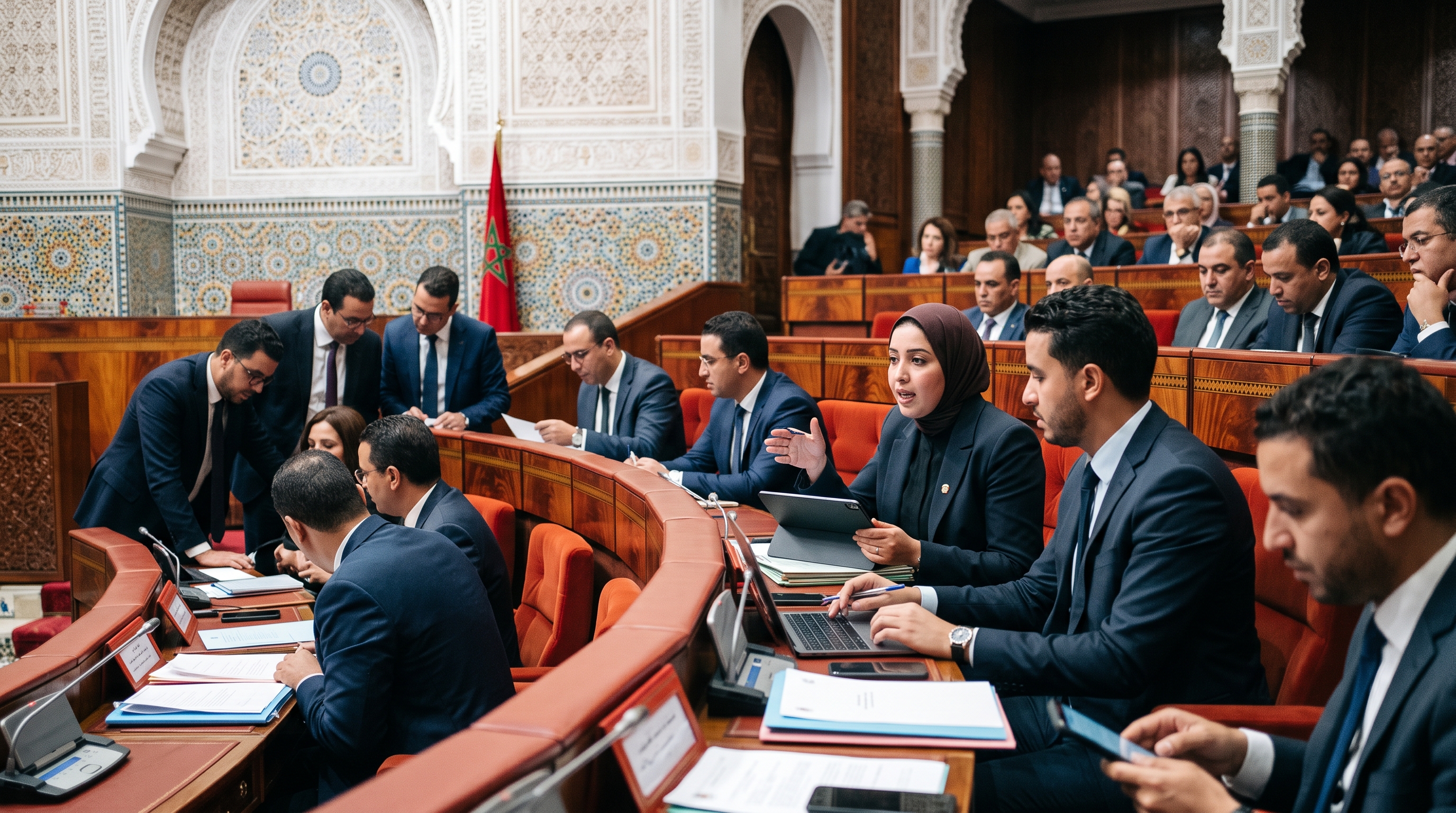
Following the legislative elections on September 23, Morocco's Chamber of Representatives is experiencing a noticeable demographic shift. A growing number of young politicians are stepping into roles as lawmakers, signaling a refreshing update to the country's political landscape.
Data from the "elections.ma" platform highlights this upward trend. Currently, elected officials under the age of 35 make up 9.37% of the Chamber, a solid increase from 8.35% during the previous legislative term. Additionally, lawmakers aged between 35 and 45 now account for 14.94% of the parliament.
This youth surge is even more striking within regional electoral districts. In these areas, the under-35 demographic actually leads the pack, representing over 33% of elected officials, easily outpacing the 45-55 age group.
This change is not a coincidence; it is deeply rooted in Morocco's legal framework. Article 33 of the Constitution specifically calls for measures that integrate young people into the nation's political, economic, and social development. Recent updates to electoral laws have actively encouraged this participation. For example, political parties now receive significantly higher financial backing—up to six times the standard amount—when a young candidate wins a seat in a local district. Furthermore, the age limit for youth candidates placed at the top of regional and local lists to qualify for public funding was lowered from 40 to 35.
Atiq Essaïd, a professor of public law and political science at Cadi Ayyad University in Marrakech, explains that these legal incentives heavily motivated political parties to prioritize younger candidates within their ranks. He points out that alongside these financial and legal nudges, simpler administrative procedures and the digitization of electoral services have made it much easier for young people to engage in politics. This shift, he notes, shows tangible progress in renewing Morocco's political elite and broadening democratic participation.
Bringing more young voices into the parliament does more than just improve statistics; it helps rebuild public trust in state institutions. Instead of merely voicing their concerns from the outside, young Moroccans are now actively participating in official decision-making.
Professor Essaïd emphasizes that these new lawmakers will breathe fresh life into parliamentary debates. By bringing modern priorities and fresh perspectives to the table, they ensure that the government addresses the rapidly changing needs of today's society. Ultimately, the true value of this younger demographic in the Chamber of Representatives won't just be measured by the number of seats they hold, but by their active impact on shaping impactful laws and holding the government accountable.