
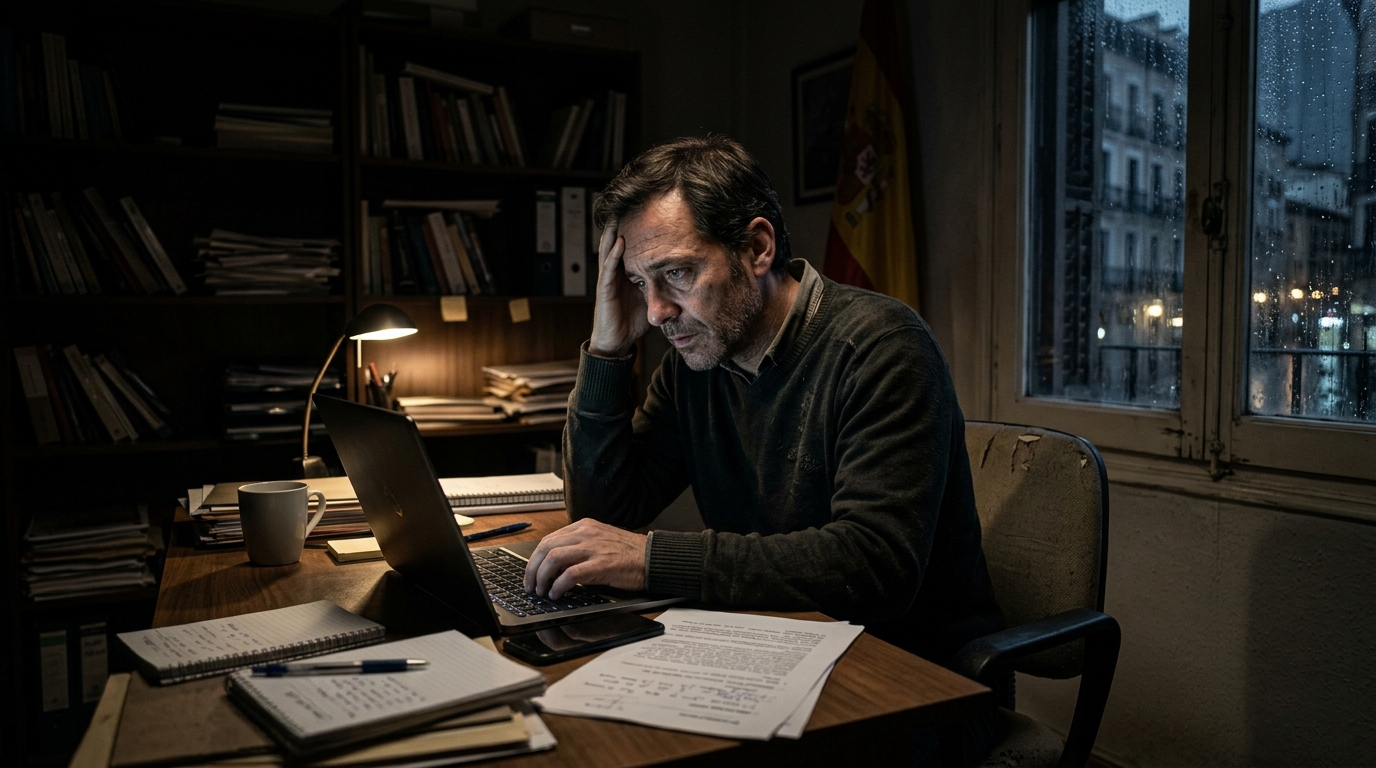
Veteran Spanish foreign correspondent and Maghreb specialist Ignacio Cembrero has become the target of violent death threats and intense online vitriol following the publication of an opinion column advocating for Spain to surrender several of its minor, uninhabited coastal territories to Morocco. The backlash erupted after Cembrero published an analytical piece in the Spanish newspaper El Confidencial, where he argued that Madrid's enduring military presence on these scattered Mediterranean outposts drains strategic resources and undermines the defense of Spain's populated North African enclaves.
A Pragmatic Reassessment of the 'Plazas de Soberanía'
In his analysis, Cembrero proposed a managed withdrawal from the minor plazas de soberanía—small islands, rocks, and fortified peninsulas dotting the North African coastline. He argued that retaining military garrisons on these rocks yields zero strategic advantage in 21st-century defense, while unnecessarily provoking Rabat and complicating bilateral relations. Instead, Cembrero asserted that Madrid should streamline its defensive footprint to unequivocally focus its diplomatic capital and military apparatus on securing Ceuta and Melilla, two full-fledged autonomous Spanish cities home to nearly 170,000 European citizens.
Shortly after the article appeared, far-right and ultra-nationalist users flooded social media with menacing messages. Cembrero documented several threats publicly, including a post on X featuring an image of a noose and a demand that he face a military tribunal for high treason without access to legal representation. Such accusations portray the journalist as a foreign asset capitulating to Moroccan sovereignty ambitions, a characterization that sharply contradicts his professional track record.
The Strategic Friction of Spain's Northern African Outposts
The territories in question represent centuries-old remnants of Spain’s imperial presence along the Barbary Coast. Known formally as the plazas de soberanía menores (minor sovereign places), they include:
- Peñón de Vélez de la Gomera: A former island turned fortified peninsula following an 85-meter-long sandy isthmus created by a 1934 storm, forming one of the shortest international land borders in the world.
- Peñón de Alhucemas: A minuscule rocky islet located just a few hundred meters from the Moroccan shore, housing an active detachment of the Spanish military.
- Islas Chafarinas: An archipelago of three islands situated slightly further east near the Algerian frontier, primarily utilized as a military outpost and scientific nature reserve.
None of these minor territories possess a permanent civilian population. Rather, they require continuous logistics, rotation of Spanish armed forces, and naval monitoring. They have historically functioned as dangerous tripwires: in July 2002, the uninhabited Perejil Island (Isla Perejil, known in Morocco as Leila) sparked a militarized standoff when Moroccan forces occupied the rock, prompting Spain to launch an amphibious commando operation to retake it before the United States brokered a return to the status quo ante.
The Paradox of Accusing Cembrero of Treason
The vitriolic accusations labeling Cembrero a sympathizer of the Moroccan government stand in stark contrast to his decades-long career. For over three decades—first as a leading correspondent for El País and subsequently with El Confidencial—Cembrero has established himself as one of Spain's most unyielding observers of Moroccan domestic politics, the Makhzen (the royal court), and covert intelligence activities.
Far from being an apologist for Rabat, Cembrero has repeatedly drawn the ire of Moroccan authorities. In 2014, the Moroccan government filed a legal complaint in Spain accusing him of inciting terrorism for linking to a jihadist propaganda video in his reporting. More recently, in 2022, the Kingdom of Morocco brought an unprecedented civil lawsuit against Cembrero in a Madrid court after he and international forensic researchers alleged that his mobile phone had been targeted by Moroccan intelligence services using the Pegasus spyware. Cembrero won the lawsuit in early 2023, solidifying his reputation as an independent, adversarial journalist rather than a diplomatic puppet.
A Sensitive Geopolitical Tightrope
The intense backlash highlights the profound domestic sensitivity surrounding territorial integrity in Spain. Even as Prime Minister Pedro Sánchez moved in 2022 to mend fractured bilateral relations by shifting Madrid's historic posture to support Morocco’s Western Sahara autonomy initiative, sovereignty over the North African coast remains an untouchable third rail in Spanish domestic politics.
While hardline circles view any discussion regarding territorial concessions as an unacceptable retreat, analysts like Cembrero maintain that failing to draw a clear distinction between vacant colonial fortifications and constitutional municipalities leaves Spain vulnerable to asymmetric geopolitical friction. For now, the aggressive harassment aimed at Cembrero underscores how entrenched patriotic sensitivities continue to complicate open strategic debate in Madrid.