
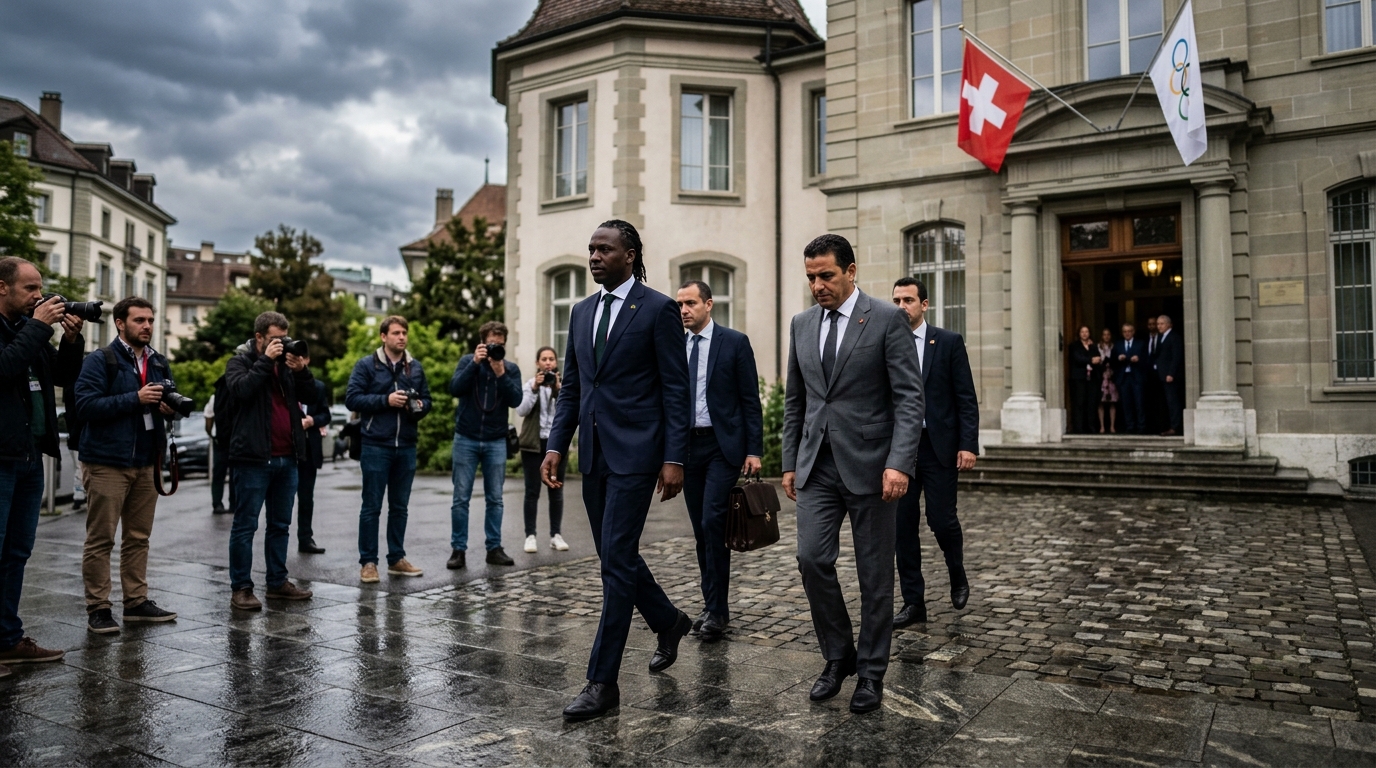
The Court of Arbitration for Sport (CAS) in Lausanne has convened behind closed doors to deliberate on Senegal’s appeal against the Confederation of African Football (CAF). The dispute challenges the administrative decision to award Morocco a forfeit victory following an acrimonious Africa Cup of Nations final. While the legal arbitration proceeds in Switzerland, it unfolds against a broader, contentious debate surrounding Morocco’s aggressive sports diplomacy and its preparations to co-host the 2026 U-17 Women's World Cup and the 2030 FIFA World Cup alongside Spain and Portugal.
The Lausanne Hearing: Disputed Walk-Off and Regulatory Fallouts
The hearing, confirmed by CAS Director Matthieu Reeb, brings together legal representatives from the Senegalese Football Federation (FSF), the Royal Moroccan Football Federation (FRMF), and CAF. A three-arbitrator panel is tasked with unraveling the chaotic climax of the continental tournament, where Senegal held a 1-0 lead before their squad briefly left the pitch in protest over a late Moroccan penalty.
Although the Senegalese side returned approximately fifteen minutes later to complete the fixture, CAF’s disciplinary committee ruled in March that the tactical walk-off constituted an official abandonment. The governing body retroactively declared a 3-0 forfeit victory for Morocco, confirming them as champions. Senegal contends that the sanction was disproportionate and disregarded on-pitch realities, demanding either reinstatement of the on-field result or an annulment of the disciplinary decree. A binding verdict is anticipated within days to several weeks.
Football Hegemony and the 2030 World Cup Paradox
The CAS dispute arrives at a delicate moment for Moroccan football administration. Beyond continental rivalries, Morocco's rapid ascent into the inner sanctum of global football governance has fueled intense domestic and international discussion:
- Institutional Influence in CAF: Critics across several African confederations, including Senegal and Algeria, have raised concerns over Rabat’s expanding sway within CAF. Led by FRMF President Fouzi Lekjaa, who also serves as Morocco's Minister Delegate for the Budget, Moroccan football has cultivated unprecedented structural leverage. The unanimous support of all 54 African federations for FIFA President Gianni Infantino ahead of elections in Rabat underscores this geopolitical weight.
- Billion-Dollar Infrastructure vs. Social Deficits: The push for the 2030 World Cup—headlined by the construction of the 115,000-seat Grand Stade Hassan II near Casablanca and massive expansions of high-speed rail—has triggered internal fiscal scrutiny. King Mohammed VI recently reaffirmed that macroeconomic expansion must bridge persistent regional and social gaps. Critics argue that diverting billions into sports mega-projects risks overshadowing urgent post-earthquake reconstruction, education reform, and public healthcare needs.
- Diplomatic Leverage and Sahara Realpolitik: Football in Morocco is inextricably linked to statecraft. Major tournaments serve as a vehicle to consolidate international recognition of Moroccan sovereignty over Western Sahara. However, this geopolitical utility regularly polarizes North African relations, turning sports venues into proxy arenas for regional disputes.
- The Final Showdown with Iberia: Moroccan officials are fiercely lobbying FIFA to host the 2030 World Cup final at the new Benslimane stadium, directly challenging Madrid’s iconic Santiago Bernabéu. This triangular competition with Spain and Portugal has exposed underlying diplomatic frictions regarding commercial revenue distribution and prestige.
As the arbitrators in Lausanne deliberate over regulatory technicalities, the case highlights the fragile balance between Morocco’s meteoric rise as a football superpower and the complex political, economic, and ethical scrutiny that inevitably accompanies global ambitions.