
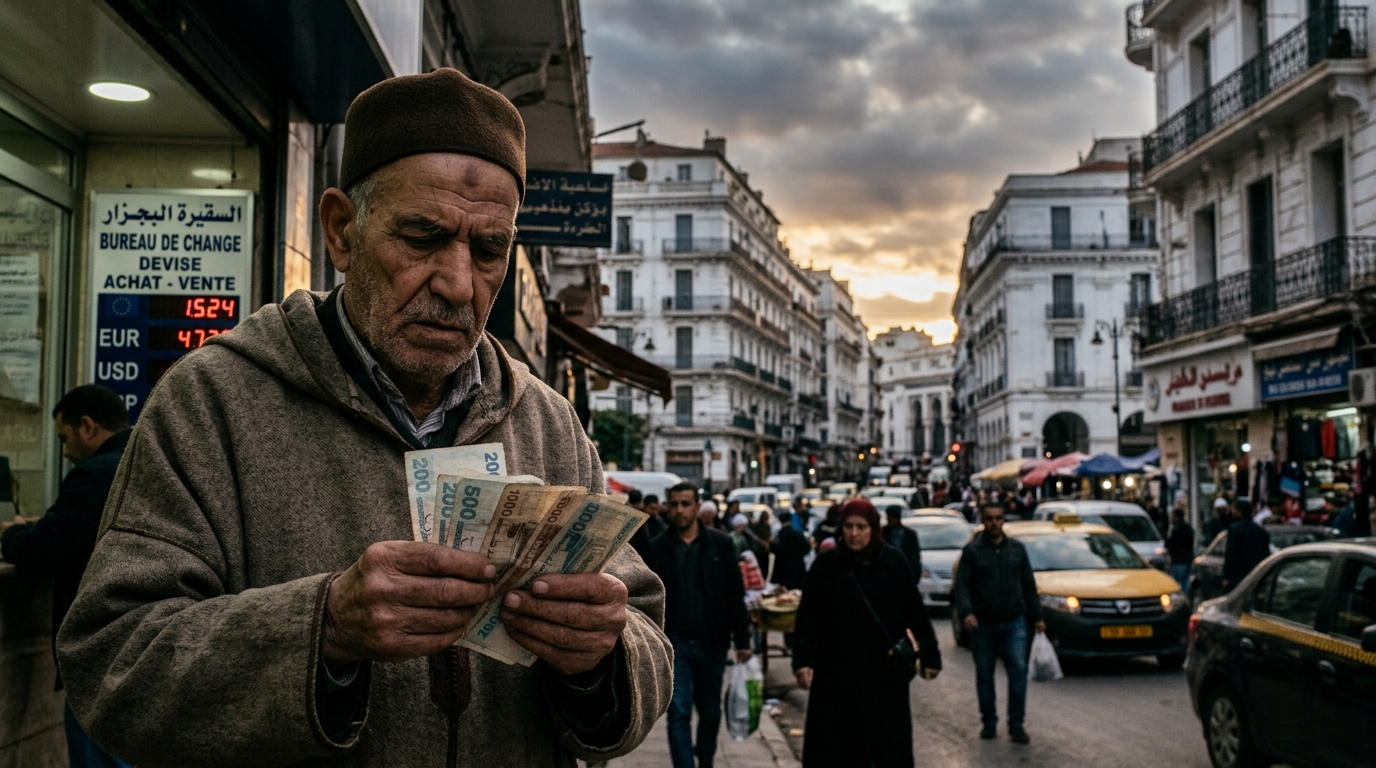
Nearly a decade after introducing "non-conventional financing" to insulate state coffers from fiscal collapse, Algeria remains caught in a precarious monetary experiment. Originally billed in late 2017 as a provisional five-year backstop following the 2014 oil price shock, the direct underwriting of state obligations by the Bank of Algeria has evolved from an emergency measure into a persistent pillar of public finance. As massive budget deficits loom and domestic liquidity continues to expand without proportional growth in output, economists and international institutions warn that the continued resort to the printing press is compounding systemic vulnerabilities in the North African nation.
The Bedrock: Algeria’s Hydrocarbon-Dependent Economy
To understand Algeria’s reliance on central bank balance-sheet expansion, one must examine its structural economic architecture. For decades, the Algerian economy has operated under a heavily centralized, hydrocarbon-centric model. Oil and natural gas account for approximately 90 to 95 percent of the country’s total export earnings and routinely generate nearly half of all state revenues. While this energy wealth historically funded an expansive welfare apparatus—characterized by universal food and fuel subsidies, vast social housing schemes, and a dominant civil service—it also created a fragile fiscal foundation highly vulnerable to volatile international benchmark prices.
Efforts to diversify away from hydrocarbons have consistently encountered severe structural bottlenecks. Algeria’s private sector remains constrained by excessive bureaucracy, state interventionism, and restrictive foreign investment frameworks. State-owned enterprises (SOEs) dominate major industrial and utility sectors, while public commercial banks control the overwhelming majority of banking assets. Because public expenditure serves as the primary engine of non-hydrocarbon economic activity, any sudden decline in energy revenue directly jeopardizes the state's capacity to maintain social peace without either borrowing internationally or creating domestic currency.
The Genesis and Escalation of Non-Conventional Financing
The turn toward direct monetary creation began in earnest under former Prime Minister Ahmed Ouyahia, whose administration amended the national Money and Credit Law in 2017. Facing dwindling sovereign wealth reserves—most notably the depletion of the Revenue Regulation Fund (Fonds de Régulation des Recettes)—the government authorized the Bank of Algeria to advance credit straight to the Public Treasury. Between late 2017 and early 2019 alone, the central bank injected over 6.5 trillion dinars into the financial system, representing roughly one-third of gross domestic product at the time.
Rather than funding capital-intensive, revenue-generating infrastructure, these unbacked injections were primarily absorbed by operational expenditures. Trillions of dinars were channeled to:
- Covering fiscal shortfalls: Absorbing recurring central government deficits and public-sector wage bills.
- Bailing out loss-making entities: Offsetting the liabilities of strategic state enterprises, including energy giant Sonatrach and electricity utility Sonelgaz.
- Shifting demographic liabilities: Backstopping the insolvent National Retirement Fund (CNR).
Inflationary Fallout and the Parallel Currency Market
While monetary financing permitted authorities to avoid external borrowing and structural adjustment programs from multilateral lenders, the domestic economic cost has been severe. The rapid expansion of M2 money supply, divorced from underlying economic productivity, has contributed to sustained upward pressure on consumer prices. Basic foodstuffs, imported capital goods, and housing have seen sharp price increases, severely eroding the purchasing power of middle- and lower-income households.
Simultaneously, the monetary distortion is acutely visible in the foreign exchange regime. The spread between the official exchange rate set by the Bank of Algeria and the unregulated, parallel market—centered at informal trading hubs like Algiers' Square Port-Saïd—has widened substantially. With import restrictions tightening to preserve hard currency and administrative quotas limiting access to foreign exchange for domestic businesses, the informal rate increasingly reflects public skepticism regarding the dinar’s intrinsic purchasing power.
Multilateral Alarms and the Looming Reserve Threshold
International watchdogs have consistently cautioned Algiers against treating monetary expansion as a sustainable substitute for economic overhaul. In consecutive Article IV consultations, the International Monetary Fund (IMF) has highlighted the perils of Algeria’s elevated fiscal deficits, which have frequently hovered between 10 and 12 percent of GDP. Multilateral analysts note that running expansive deficits financed predominantly through captive public financial institutions and central bank mechanisms directly threatens macroeconomic stability.
Compounding these concerns is the medium-term outlook for Algeria's foreign exchange buffers. While periods of elevated European gas prices provided brief breathing room following geopolitical shocks in 2022, structural expenditures continue to outstrip baseline hydrocarbon revenues. Projections warn that without comprehensive fiscal rationalization, export diversification, and an exit from unbacked liquidity injections, Algeria’s foreign currency reserves could fall to critical operational thresholds in the coming years. Policymakers in Algiers face an increasingly stark choice: implement painful, market-oriented reforms to invigorate domestic production, or risk prolonged currency depreciation and entrenched economic stagnation.