
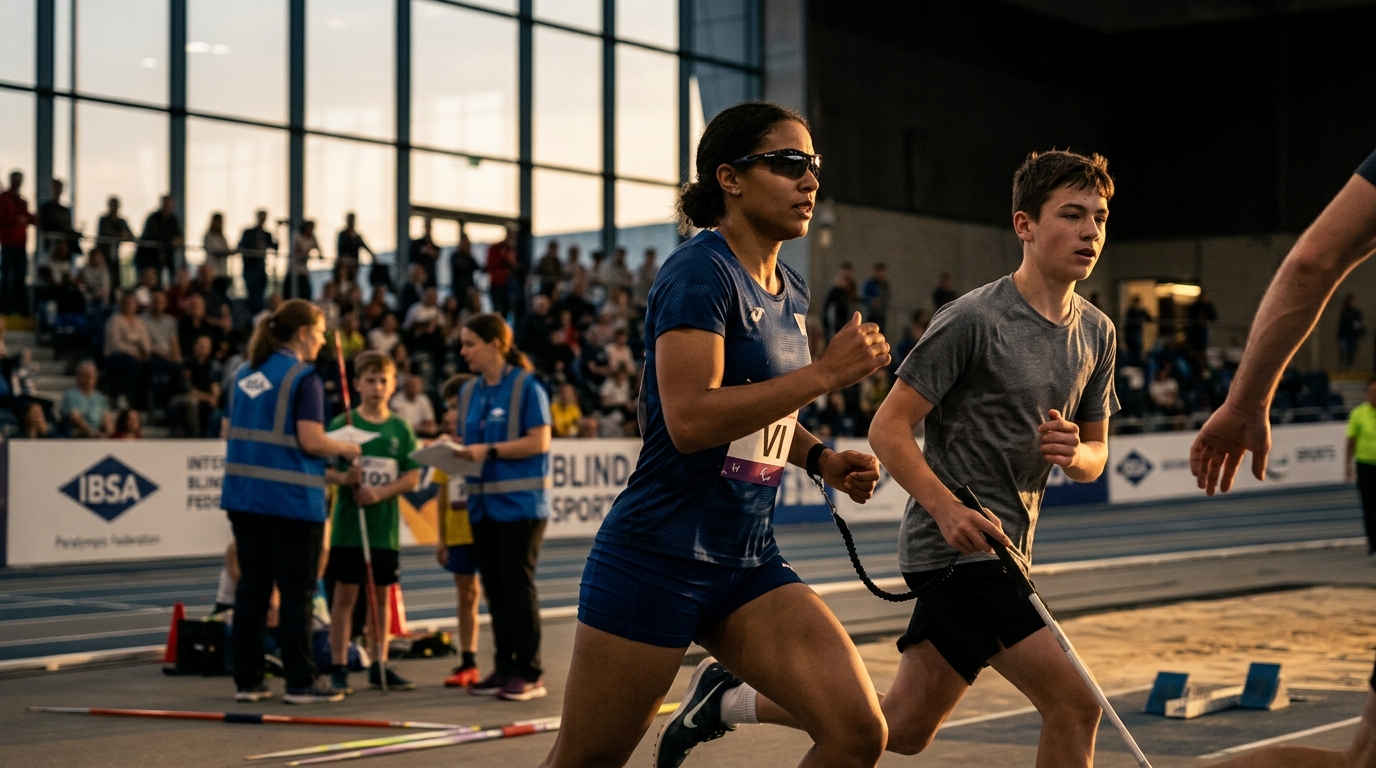
The global governance of adaptive athletics is entering a critical juncture. As parasports garner unprecedented commercial viewership and institutional investment, the International Blind Sports Federation (IBSA) is recalibrating its strategic roadmap to reconcile elite Paralympic representation with widespread grassroots access. While flagship disciplines such as Blind Football, Goalball, and Para Judo remain central to the Paralympic Games, the federation’s broader portfolio—spanning Torball, Showdown, Ninepin Bowling, and Chess—represents an under-the-radar movement aimed at breaking socio-economic and infrastructural barriers for athletes with visual impairments worldwide.
The Dual-Track Ecosystem: High-Performance vs. Community Participation
Founded in 1981, IBSA serves as the international governing body for several marquee sports contested at the Paralympic level, yet much of its institutional work occurs outside the spotlight of quadrennial mega-events. While Blind Football (B1) and Goalball have achieved global recognition, specialized non-Paralympic sports offer critical entry points into physical activity for visually impaired individuals. Showdown—a high-speed table game played with tactile cues and an audible ball—and Torball continue to build substantial competitive circuits across Europe, South America, and Asia without the multi-million-dollar broadcast rights seen in mainstream adaptive sports.
Developing these sports requires a distinct operational model. Unlike mainstream sports governing bodies that rely heavily on corporate sponsorships and media rights, adaptive sports federations face steep capital requirements for specialized equipment, such as acoustic balls, specialized eyewear, soundproof playing facilities, and specialized tactile board sets. Member national federations frequently operate on thin municipal subsidies, making IBSA’s role in distributing technical guidelines, officiating standards, and organizational resources vital for maintaining viable local programs.
Integrity, Classification, and the Anti-Doping Frontier
As elite competition grows fiercer and international podium finishes yield substantive state stipends and commercial endorsements, regulatory scrutiny has tightened. At the core of fair competition within IBSA’s remit is sight classification—a rigorous medical evaluation that groups athletes into B1, B2, or B3 tiers according to their visual acuity and visual field. The federation has expanded its investments in training independent international classifiers and standardizing classification protest procedures to eliminate competitive disparities.
Parallel to medical classification, anti-doping infrastructure in blind sports has undergone significant modernization. Adhering to the World Anti-Doping Agency (WADA) Code, IBSA manages a comprehensive testing matrix that includes Athlete Biological Passports (ABP), targeted out-of-competition testing pools, and strict Therapeutic Use Exemption (TUE) tracking. Visually impaired athletes encounter distinct administrative hurdles regarding whereabouts reporting and medication verification, prompting the federation to deploy accessible anti-doping education apps and specialized athlete-advocacy mechanisms to safeguard clean sport without introducing unintended compliance barriers.
Future Outlook: Hosting Economic Sustainability and Global Expansion
Looking past the milestone of the Birmingham 2023 IBSA World Games, the federation is confronting the evolving economics of hosting major multi-sport events. Organizing an international blind sports competition involves complex logistics, from ensuring complete venue accessibility and specialized guide dog relief zones to coordinating sighted guide logistics and acoustic isolation for auditory sports. To encourage prospective host cities, IBSA is refining its host-selection frameworks to prioritize modular, cost-efficient bidding processes that build lasting urban accessibility rather than transient athletic infrastructure.
The ultimate metric of success for IBSA lies in closing the gap between developing nations and established parasport powerhouses. While Western Europe and parts of East Asia maintain institutional pipelines from school-level adaptive PE to elite national squads, emerging regions face deficits in trained classifiers, coaches, and accessible sporting venues. By synchronizing regional committees, streamlining member resources, and reinforcing regulatory trust, the federation is working to ensure that visual impairment ceases to be a barrier to high-performance athletic achievement.