
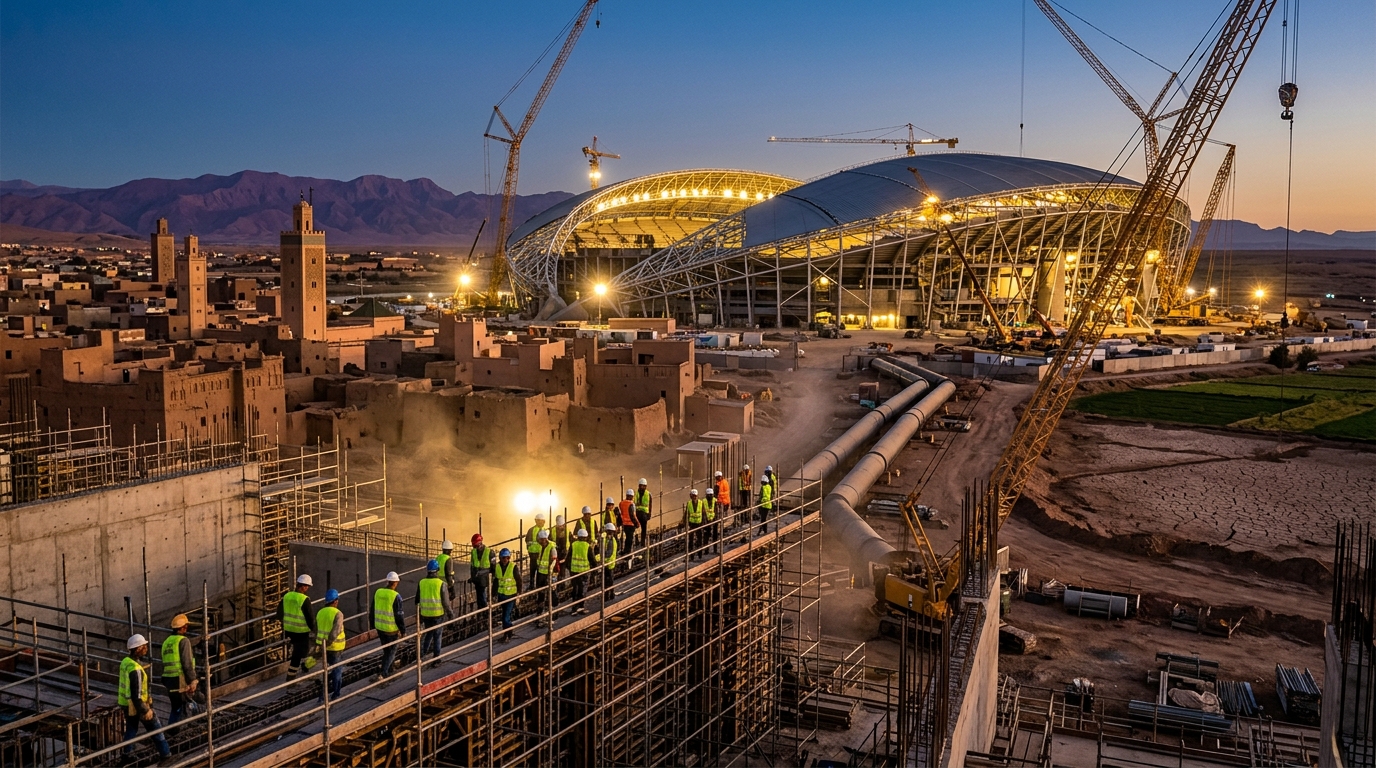
As Morocco prepares to co-host the historic 2030 FIFA World Cup alongside Spain and Portugal, the kingdom is transforming at an unprecedented pace. With massive financial backing and strategic national planning, the tournament is poised to elevate Morocco's international standing. The International Monetary Fund (IMF) estimates that Morocco’s infrastructure program linked to connectivity and tourism could reach billions of dirhams between now and 2030.
However, hosting a global event of this magnitude brings distinct economic shifts. For citizens, expats, and incoming travelers, navigating the tournament period will require understanding what will change, what will be hard to find, and what will cost significantly more.
What to Expect: A Nation Redefined
Morocco is undergoing a structural evolution to accommodate an estimated 26 million tourists by 2030. The government has already injected over $18 billion into massive transport, stadium, and urban development projects across six key host cities: Casablanca, Rabat, Marrakech, Tangier, Fez, and Agadir.
- State-of-the-Art Arenas: The crown jewel of the tournament will be the Grand Stade Hassan II in Benslimane near Casablanca. Designed to hold 115,000 spectators, it is set to be the largest football stadium in the world and Morocco's leading candidate to host the World Cup Final. Major renovations are also transforming existing venues like the Prince Moulay Abdellah Stadium in Rabat and the Grand Stade de Marrakech.
- High-Speed Transit Networks: The expansion of the TGV high-speed rail line will seamlessly connect Tangier to Marrakech via Rabat and Casablanca. Simultaneously, airport capacities are doubling to handle up to 80 million passengers annually, backed by a major fleet expansion from Royal Air Maroc.
What Will Become Scarce?
Despite extensive preparation, the sheer volume of visitors during the tournament weeks will inevitably strain local supply chains.
- Short-Term Housing and Hotel Beds: While the Ministry of Tourism is actively working to add 60,000 new hotel beds to bring total capacity past 300,000, space will remain at a premium. Prime hotel rooms, traditional riads, and short-term apartment rentals will be completely booked months in advance.
- Domestic Travel Tickets: High-speed rail seats and domestic flights between host cities will sell out rapidly on match days. Commuters and tourists who do not reserve their transport early will face severe scheduling bottlenecks.
- Premium Event Services and Professional Talents: Experienced hospitality staff, bilingual guides, event coordinators, and private transport drivers will be fully booked by international delegations and corporate sponsors.
What Will Become Expensive?
Basic economic principles dictate that soaring demand will drive consumer prices upward, particularly in host urban centers.
Independent financial assessments, such as data from regional property analysts at REA Consult, warn buyers against purchasing over-inflated real estate in premature zones, noting that the market will experience heavy local speculation leading up to the event.
The Hidden Value: A Lasting Legacy
The true story of Morocco 2030 goes beyond the temporary price spikes and crowded tourist spots. The country is deliberately positioning this tournament as a catalyst for environmental sustainability and long-term economic transformation.
By modernizing public transit, investing heavily in renewable energy infrastructure, and training tens of thousands of young professionals in international management, hospitality, and tech solutions, Morocco is building a foundation that will pay dividends for decades. The tournament will pass, but the modern infrastructure, economic integration with Europe, and global prestige will permanently reshape the Kingdom.
We should all be deeply proud of the incredible progress Morocco has made recently in both sports and innovation. From spectacular athletic achievements to hosting world-class events and building state-of-the-art facilities, the Kingdom is proving to be a true leader, driving growth and inspiring the entire African continent.