
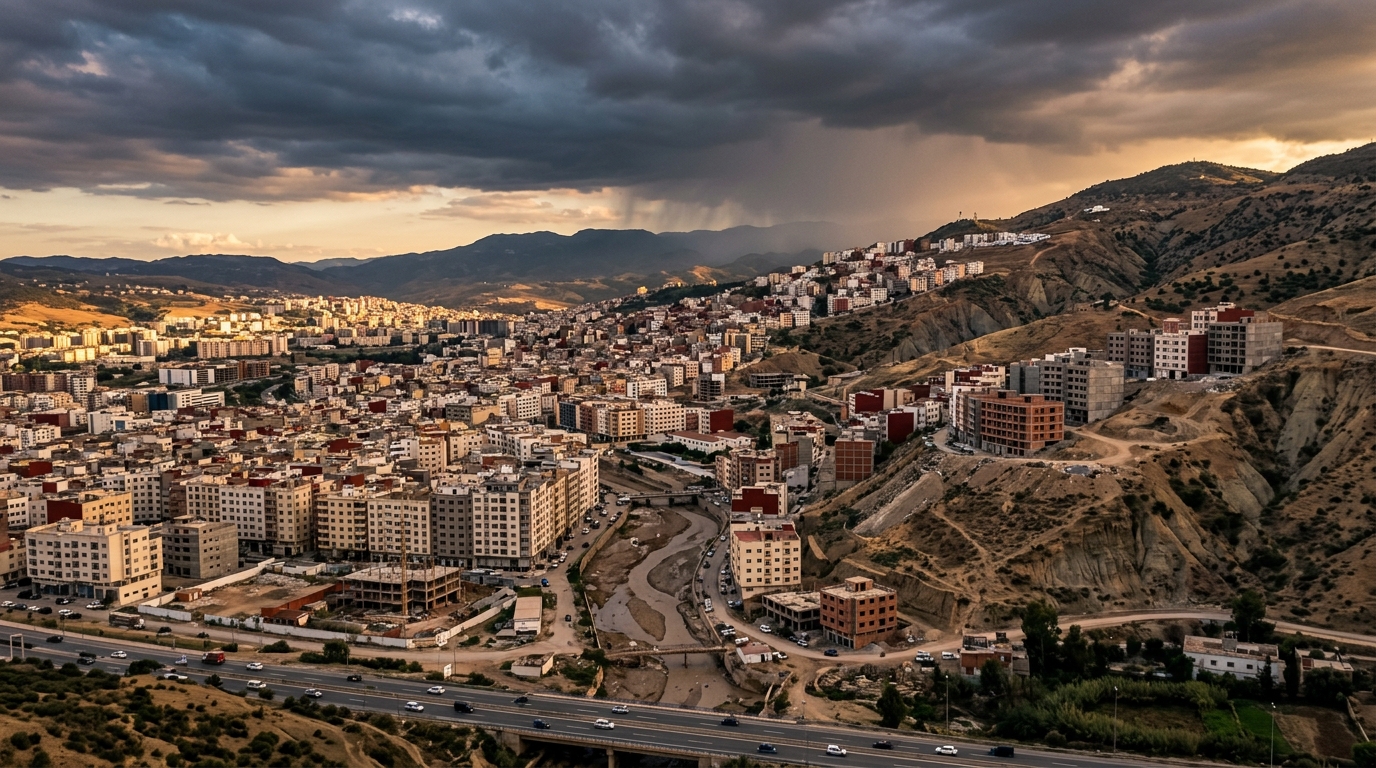
Morocco faces an enduring economic drain from climate vulnerabilities and geophysical hazards, with natural disasters estimated to siphon at least 7.8 billion dirhams ($780 million) from the national economy each year. According to benchmark assessments from the World Bank, recurrent hydrological events (primarily seasonal flash floods and riverine inundations) account for nearly 60 percent of all direct capital losses. With infrastructure exposure evaluated in excess of 2,700 billion dirhams across high-risk corridors, the kingdom is racing to protect assets equivalent to roughly 84,000 dirhams per capita from escalating environmental shocks.
The Dual Burden of Flash Floods and Seismic Shocks
Historically, Morocco’s disaster landscape has swung between devastating hydrological episodes and catastrophic seismic activity. Between 2000 and 2013 alone, thirteen major flood events claimed 263 lives and inflicted over $427 million in direct destruction, culminating in the 2014 Guelmim disaster, which caused nearly $600 million in losses in a matter of days. Concurrently, the proximity of northern metropolises such as Tangier and Fès to the tectonic boundary dividing the African and Eurasian plates maintains a perpetual seismic threat. Historical precedents (including the tragic 1960 Agadir earthquake that destroyed an entire coastal city and the 2004 Al Hoceïma tremor) underline the extreme vulnerability of densely populated urban fabrics built prior to modern seismic compliance codes.
Rapid Urbanization Amplifies Coastal and Inland Exposure
The acceleration of rural-to-urban migration has exacerbated this exposure. Metropolises like Casablanca have witnessed rapid expansion along perimeter zones and natural drainage basins, pushing residential densities into low-lying floodplains. Environmental modeling indicates that by the end of the decade, as much as 42 percent of Morocco’s coastlines will experience heightened susceptibility to marine erosion and tidal storm surges. With climate scenarios pointing to regional warming between two and four degrees Celsius, precipitous drops in summer precipitation, and an estimated 35-centimeter sea-level rise along the Strait of Gibraltar by century's end, the spatial distribution of industrial assets requires urgent re-evaluation.
Widening Disparities and the Cost of Inaction
The macroeconomic ramifications of recurring disasters intersect directly with socioeconomic inequity. Low-income households bear a disproportionate burden of physical destruction while remaining effectively shut out from formal recovery mechanisms; merely 5 percent of impoverished citizens hold access to credit or emergency financing following an event, compared to 17 percent of higher-income households. Moreover, catastrophic risk insurance coverage across small- and medium-sized enterprises remains sparse, transferring the ultimate liability directly onto state budgets and municipal coffers. As analyzed in the recent Key Economic Highlights Report 2026, unexpected fiscal drains from disaster remediation can quickly compress public capital expenditures, siphoning crucial allocations away from structural transformation and industrial modernization programs.
Building Resilience: From Post-Disaster Relief to Anticipatory Finance
To stem this multi-billion-dirham fiscal leakage, Moroccan policymakers have steadily abandoned fragmented, reactive relief in favor of integrated disaster risk management. Developed in coordination with international financial institutions, the national resilience framework focuses on multi-peril risk cartography-tracking flash floods, seismic fault lines, tsunamis, and soil erosion with granular GIS modeling. By deploying sovereign catastrophe insurance instruments, strengthening parametric liquidity facilities, and enforcing resilient municipal zoning codes, the kingdom aims to decouple economic expansion from catastrophic natural shocks and safeguard long-term development stability.