
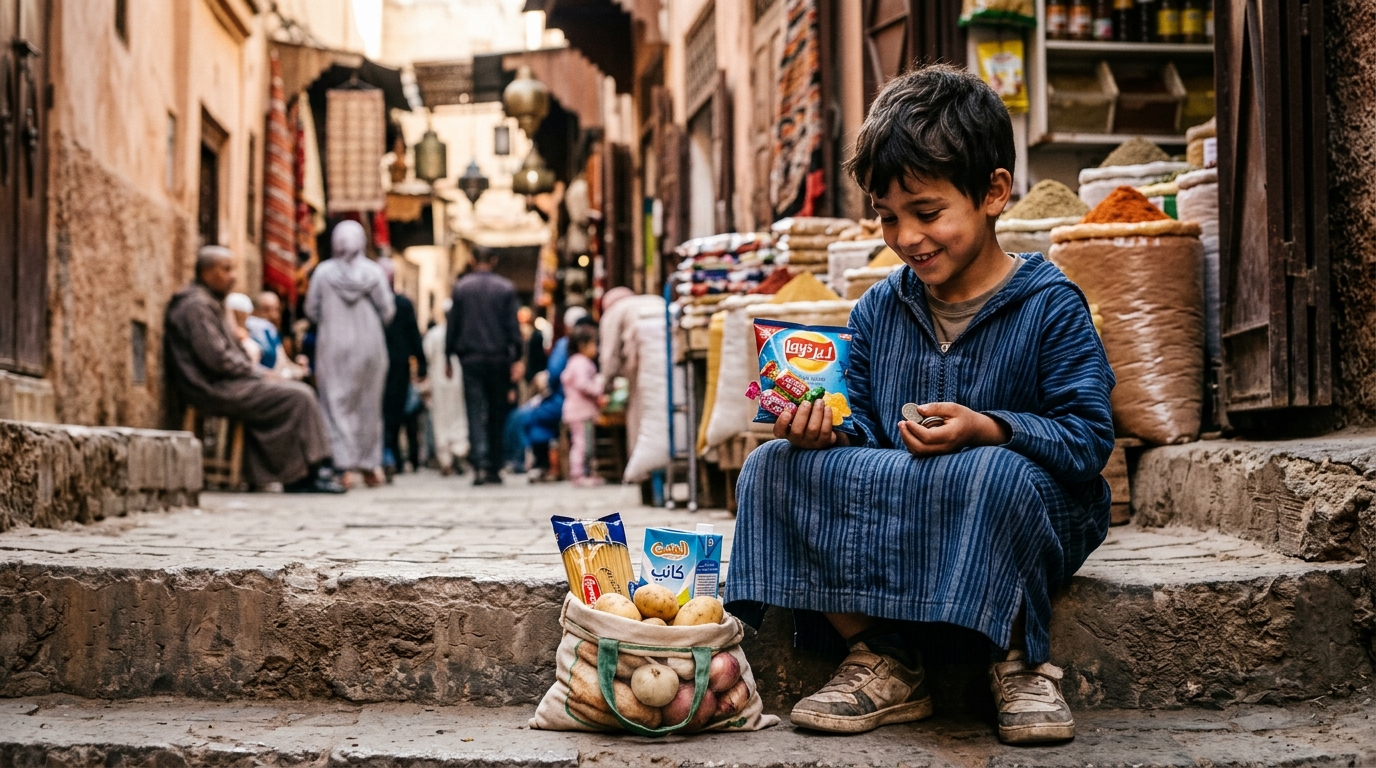
There was a time in Morocco when a single coin could make a child feel like royalty. Walking into the local hanout (neighborhood grocery store) with a silver 1 Dirham (MAD) coin opened up a world of possibilities. For decades, that small piece of currency carried immense weight, acting as a passport to everyday pleasures, snacks, and daily essentials.
Today, if you look at a 1 Dirham coin, it barely covers a piece of chewing gum or a plastic shopping bag. The phrase "Zaman al-rakha" (the era of abundance and low prices) is frequently repeated by older generations with a mix of fondness and regret.
To truly appreciate where Morocco's economy stands today, we have to look back at what 1 Dirham used to buy, and understand the powerful economic forces that changed our relationship with money forever.
The 1 Dirham Feast: What a Single Coin Used to Buy
For anyone who grew up in Morocco during the 1980s, 1990s, or even the early 2000s, the purchasing power of 1 Dirham is a core childhood memory. The hanout was a treasure trove where prices were stable for years at a time.
If you had 1 Dirham in your pocket years ago, you could choose from an impressive lineup of iconic products:
- The Legend of Raibi Jamila: For a long time, Morocco’s most famous pomegranate-flavored yogurt drink cost exactly 1 DH. Pairing it with a classic Tonik or Henry's biscuit—which also cost 1 DH each—was the ultimate after-school ritual.
- Fresh Bread (Khobz): A staple of every Moroccan household. A standard, freshly baked round loaf of bread from the neighborhood bakery or local market was priced tightly at 1 DH for generations.
- The Modern Legend of Bimo: Traditional chocolate-covered wafers like Merendina or Tango initially entered the market at the accessible 1 DH price point, serving as a staple treat for students.
- A Handful of Street Snacks: If you visited the traditional street vendors, 1 DH could buy you a generous paper cone filled with hot, salted chickpeas (Hami), roasted sunflower seeds (Zari3a), or a refreshing glass of cold sugarcane juice.
- Household Essentials: Need to run an errand for your mother? 1 DH could purchase a small single-use sachet of Tide laundry detergent or a single egg to finish a recipe.
In those days, money felt tangible and stable. You knew exactly what a coin was worth, and that worth didn't change from one month to the next.
The Turning Tide: Why Did Everything Become So Expensive?
It is easy to look back and view the rise in prices as a simple act of corporate greed, but the reality is deeply tied to global macroeconomics. The primary culprit behind the death of the 1 Dirham budget is inflation.
Inflation is the gradual decrease in the purchasing power of money, reflected in a general increase in the prices of goods and services. In Morocco, several specific factors accelerated this transition over the last decade:
1. The Global Supply Chain and Imported Inflation
Morocco is an open economy that relies heavily on imports for energy (petroleum and gas) and essential food commodities (like wheat, sugar, and cooking oil). When global events—such as geopolitical conflicts, shipping disruptions, or climate shocks—cause international oil and grain prices to spike, Morocco imports those higher costs. The local factory producing your favorite biscuit now has to pay double for transport and raw flour, forcing them to raise the retail price to survive.
2. The Subsidy System Reform (La Caisse de Compensation)
Historically, the Moroccan government heavily subsidized basic items like sugar, flour, and cooking gas to keep them cheap for the general public. However, maintaining these subsidies costs billions of Dirhams annually. As Morocco modernized its economy and shifted toward more targeted social welfare systems, subsidies on various goods were gradually reduced or restructured. Without heavy government artificial price caps, market forces took over, and retail prices naturally adjusted upward.
3. Climate Change and Local Agriculture
Morocco's economy is structurally dependent on rain. Severe, consecutive years of drought have heavily impacted local agricultural yields. When water becomes scarce, the cost of farming vegetables, feeding livestock, and producing dairy skyrockets. This structural shift is why local staples like tomatoes, onions, and meat have seen dramatic price increases, moving far beyond the reach of loose pocket change.
The Evolution, Not the End
Today, those iconic 1 DH products have adjusted to the times. Raibi Jamila and Merendina have seen their prices double or triple, or in some cases, the price remained low but the physical size of the product shrank—a phenomenon economists call shrinkflation.
While it is natural to feel nostalgic for the days when 1 Dirham was a small fortune, this shift is a normal part of a growing, developing economy. Morocco is no longer the isolated market it was forty years ago; it is a vital player on the global stage. As our economy matures, our focus must shift from mourning the prices of the past to smarter budgeting, investing, and adapting to the financial realities of the future.