
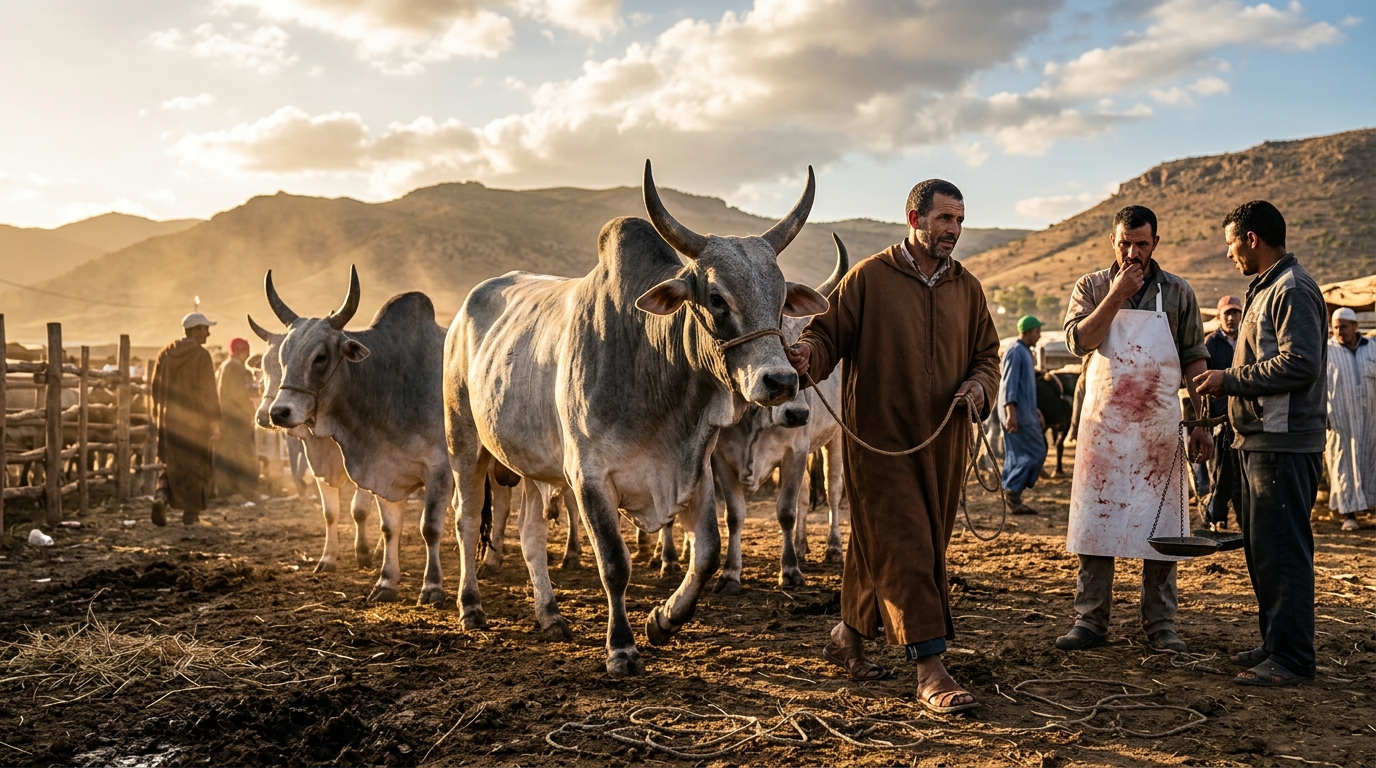
Morocco’s retail meat market continues to grapple with persistent inflationary pressure, even as a massive maritime logistical corridor funnels South American livestock into the Kingdom. Domestic importers have brought in approximately 250,000 head of cattle from Brazil so far this year, exhausting the lion's share of Rabat’s annual 300,000-head import quota. Yet for ordinary Moroccan families walking into neighbourhood butcheries, the heavy foreign influx has failed to deliver meaningful relief at the cash register.
A Supply Line Stretched Across the Atlantic
The total reliance on Brazilian livestock stems from an abrupt sanitary roadblock closer to home. Earlier this year, Moroccan veterinary authorities suspended livestock imports from traditional European suppliers following outbreaks of lumpy skin disease (nodular dermatosis), a highly contagious viral illness that affects cattle. While the embargo insulated Moroccan herds from cross-border infection, it cut off vital short-sea shipping routes from Southern Europe.
According to Mohamed Jebli, president of the Moroccan Federation of Livestock Sector Entrepreneurs, domestic buyers had no structural alternative but to pivot entirely to Brazil. Transatlantic livestock carriers incur steep maritime transport expenses, heavy bunker fuel costs, and complex veterinary compliance overheads. Despite the quota possibly expanding next year to guarantee baseline supply, Jebli noted that long-distance freight charges have effectively created an elevated price floor that importers cannot bypass.
Butchers Face Wholesale Squeeze and Diminishing Demand
In local retail shops, premium cuts of beef regularly trade north of 130 Moroccan dirhams (approximately €12) per kilogram—an exorbitant threshold for average households navigating wider living-cost pressures. Wholesale rates charged by municipal abattoirs remain uncomfortably elevated, leaving butchers operating on razor-thin margins.
Ahmed Chehab Taha, president of the General Butchers’ Union, acknowledged that Brazilian cattle imports have at least averted acute shortages that would have sent prices into uncharted territory. Nonetheless, the stabilization has come at an already prohibitive level. Since the mid-year religious holidays, butchers nationwide have reported an overt buyer retreat, with consumers purchasing strictly reduced quantities or turning to cheaper poultry alternatives to balance household balance sheets.
The Seasonal Anatomy of Meat Price Spikes
The lingering price crunch highlights the extreme sensitivity of Morocco’s red meat sector, where ovine (sheep) and bovine markets are repeatedly buffeted by both ecological realities and the cultural calendar. Understanding why livestock costs surge requires examining critical seasonal bottlenecks:
- Eid al-Adha (The Feast of Sacrifice): This represents the annual apex of sheep and goat prices. Because millions of households purchase a live animal simultaneously within a narrow two-week window, regional speculative traders and intermediary handlers drive prices up sharply. In drought-afflicted years, scarcity turns the religious obligation into a severe economic ordeal.
- The Month of Ramadan: Daily evening meals (Iftar) and nightly gatherings prompt an intense monthly consumption cycle for tagines and traditional soups such as harira, creating a predictable annual demand shock for fresh beef and lamb.
- Summer Wedding and Festival Season: Between July and late August, rural and urban celebrations multiply. High demand for large-scale catering services systematically depletes abattoir inventories, keeping ovine and bovine prices buoyant right after the mid-year festivities.
- Climatic Drought Cycles: North Africa's recurrent dry spells severely degrade natural rangelands. When pasture dries up, pastoralists must buy costly feedstuffs like subsidized barley and imported forage or liquidate their breeding females, a structural dynamic that inevitably triggers severe supply shortages and higher prices in subsequent years.
Structural Hurdles Loom Ahead
While government authorities contemplate expanding livestock quotas into the next calendar year, industry insiders stress that imports remain a stopgap rather than a remedy. Rebuilding the national breeding stock, easing the fiscal strain of livestock feed on rural herders, and navigating geopolitical and climatic bottlenecks will prove decisive if Morocco is to decouple its essential red meat supply from volatile global logistics.