
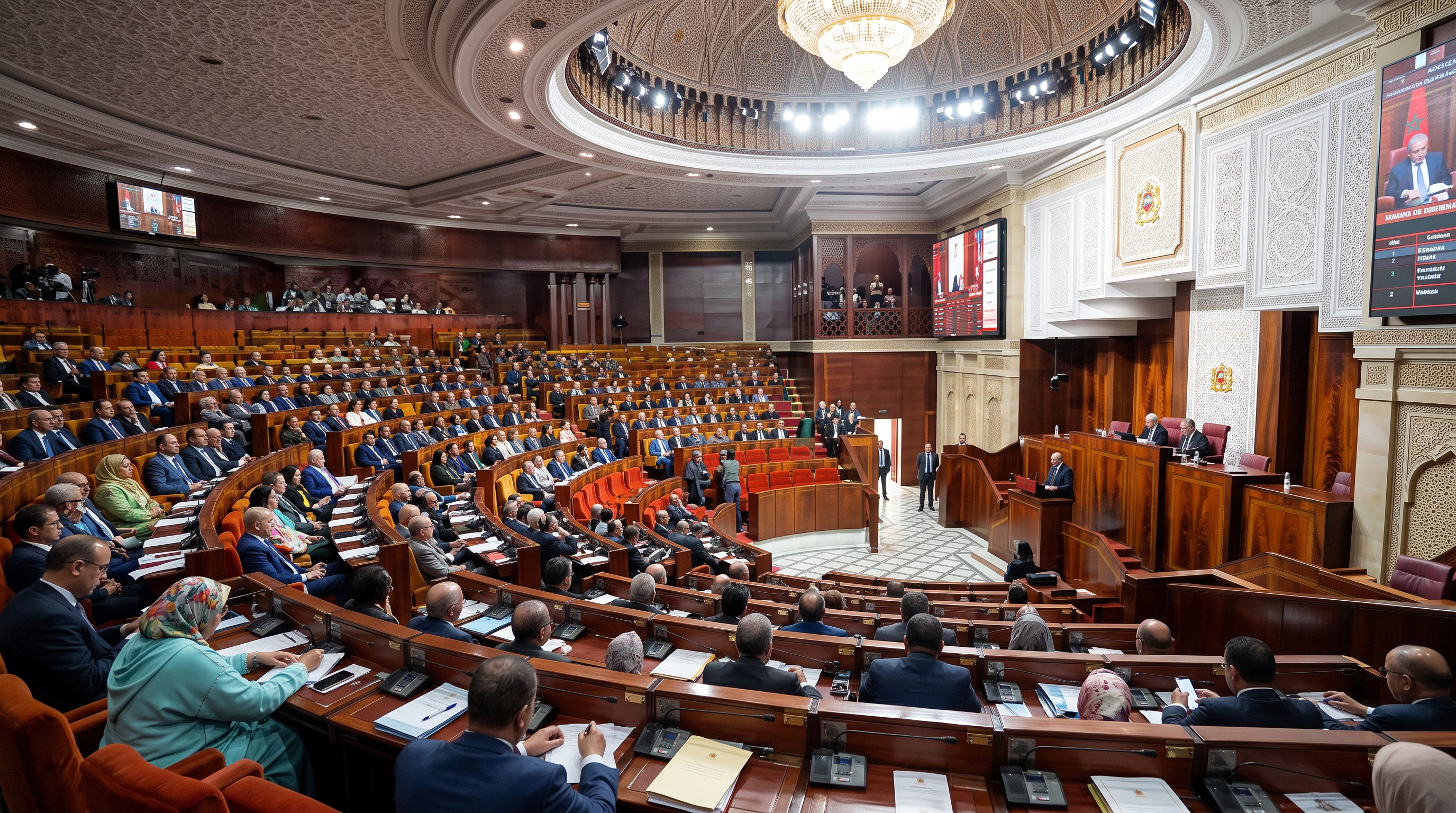
This Friday marks the beginning of the 12th legislative term for the Moroccan Parliament. As lawmakers gather for their inaugural session, they are confronted with significant social, economic, and political hurdles, alongside growing public demand for more impactful governance.
This opening session takes place while discussions to form a new government are still ongoing, following the September 23 elections that distinctly shifted the political makeup of the lower house. During this gathering, members are also scheduled to elect a new House Speaker and reorganize their internal committees.
Representatives from both the ruling coalition and the opposition are expected to take a more active, hands-on approach to guiding public policy. Their primary focus will likely center on stabilizing the macroeconomy, reinforcing the foundations of a welfare state, and driving large-scale national development initiatives.
One of the first major hurdles for the newly assembled House will be navigating the 2027 Finance Bill during a period of global economic unpredictability. According to Abdelaziz Karraky, a political science researcher at Mohammed V University in Rabat, this financial legislation will act as a true measure of the parliament's overall effectiveness once its groups and structures are fully established.
In a recent statement, Karraky emphasized that job creation, expanding social protections, and minimizing regional inequalities must be top priorities for lawmakers. He suggested that the parliament should better leverage its oversight capabilities to guarantee that economic progress benefits all citizens equally.
Achieving this geographic balance requires close monitoring of public investments across local municipalities, with a special focus on improving living conditions in rural, mountainous, and oasis communities. Furthermore, tackling youth unemployment—especially assisting university graduates in entering the workforce—is absolutely essential for building a robust and supportive society.
Finally, the researcher highlighted the importance of strengthening parliamentary diplomacy to better align with Morocco's international strategic goals. He encouraged lawmakers to introduce meaningful, well-crafted legislation that can restore public trust in the political process. Ultimately, the success of this new legislative body will depend heavily on its ability to promote inclusive growth through strong laws, strict government oversight, and actions that genuinely reflect the expectations of the Moroccan people.