
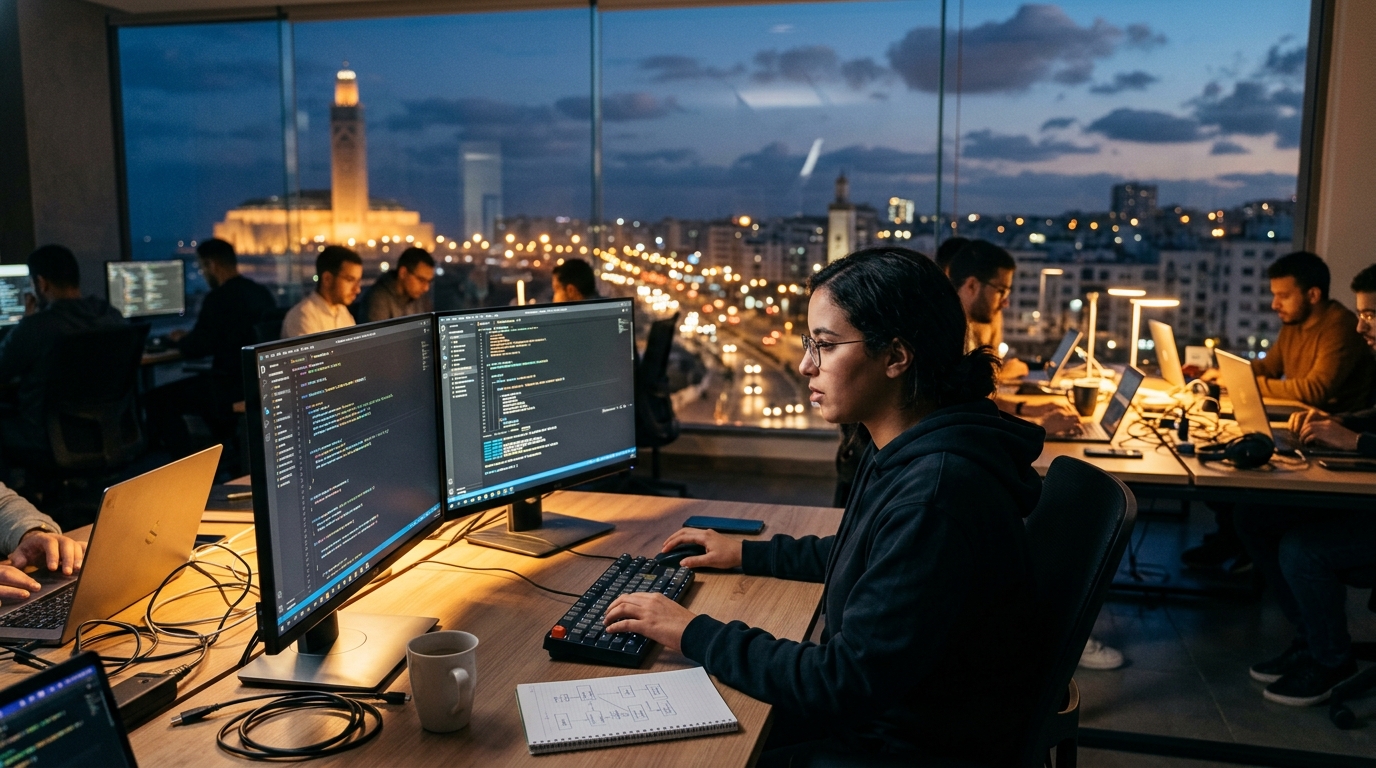
For decades, Morocco has been celebrated for its rich culture, bustling tourism, and strategic position as the gateway between Africa and Europe. However, a quiet revolution is brewing beneath the surface. As the global economy shifts toward digitalization, Morocco stands at a critical crossroads. By significantly ramping up investments in its information technology (IT) sector—specifically focusing on software developers, engineers, and digital infrastructure—the Kingdom has the potential to transform from a tech consumer into a leading global tech exporter.
Cultivating the New Digital Workforce
The foundation of any thriving tech ecosystem is its human capital. Morocco already boasts a young, multilingual, and increasingly tech-savvy population. Currently, thousands of Moroccan engineers graduate every year, but many look abroad for opportunities, leading to a classic "brain drain."
Direct investment in developers changes this dynamic. When capital is channeled into local tech academies, advanced coding bootcamps, and university research programs, it creates a robust pipeline of highly skilled professionals. Moreover, fostering a community of specialized developers—such as those skilled in Artificial Intelligence (AI), cloud computing, and blockchain—allows Morocco to tackle complex global projects right from Casablanca, Rabat, or Tangier.
From Outsourcing to Innovation Hub
Historically, Morocco’s IT sector has relied heavily on offshoring, providing IT support and basic software maintenance to European companies, primarily in French-speaking markets. While this has provided steady employment, the real economic multiplier lies in high-value software development and intellectual property creation.
Increased funding would allow Moroccan startups and established companies to transition from executing someone else's vision to building their own products. Imagine Moroccan-made fintech platforms solving financial inclusion challenges across the African continent, or localized AI tools optimizing water management in arid regions. By empowering developers to innovate rather than replicate, Morocco can move up the global value chain.
The Ripple Effect on the Local Economy
Investing in software developers is never just about the tech sector; it triggers a powerful economic ripple effect.
- Job Creation: Every high-tech job created supports multiple indirect jobs in marketing, logistics, administration, and hospitality.
- SME Digitization: A thriving local developer ecosystem means traditional Moroccan small and medium-sized enterprises (SMEs) gain easier, more affordable access to custom digital tools, e-commerce platforms, and automation.
- Foreign Direct Investment (FDI): Global tech giants are constantly searching for new talent hubs. A dense, highly skilled Moroccan developer community, backed by favorable government tech policies, makes the country an irresistible destination for international venture capital.
Bridging the Gap: Infrastructure and Policy
To unlock this future, funding must target more than just education. Developers need a stable, high-speed environment to thrive. This means continuous investment in 5G infrastructure, reliable data centers, and widespread fiber-optic connectivity across both urban and rural areas.
Simultaneously, updating regulatory frameworks is essential. Introducing specialized grants for software startups, tax incentives for tech companies that train junior developers, and simplified intellectual property laws will create a secure and attractive environment for innovation.
The Path Forward
The blueprint for success is already out there. Countries with similar geographic or economic profiles have successfully leveraged focused IT investments to redefine their global standing. For Morocco, the pieces of the puzzle are already on the table: geographical proximity to Europe, strong ties with the rest of Africa, and a young generation eager to code the future.
By treating IT investments not as an expense, but as a core pillar of national strategy, Morocco can build an resilient, forward-looking economy. The code for Morocco’s future is waiting to be written, and its developers are holding the keyboard.