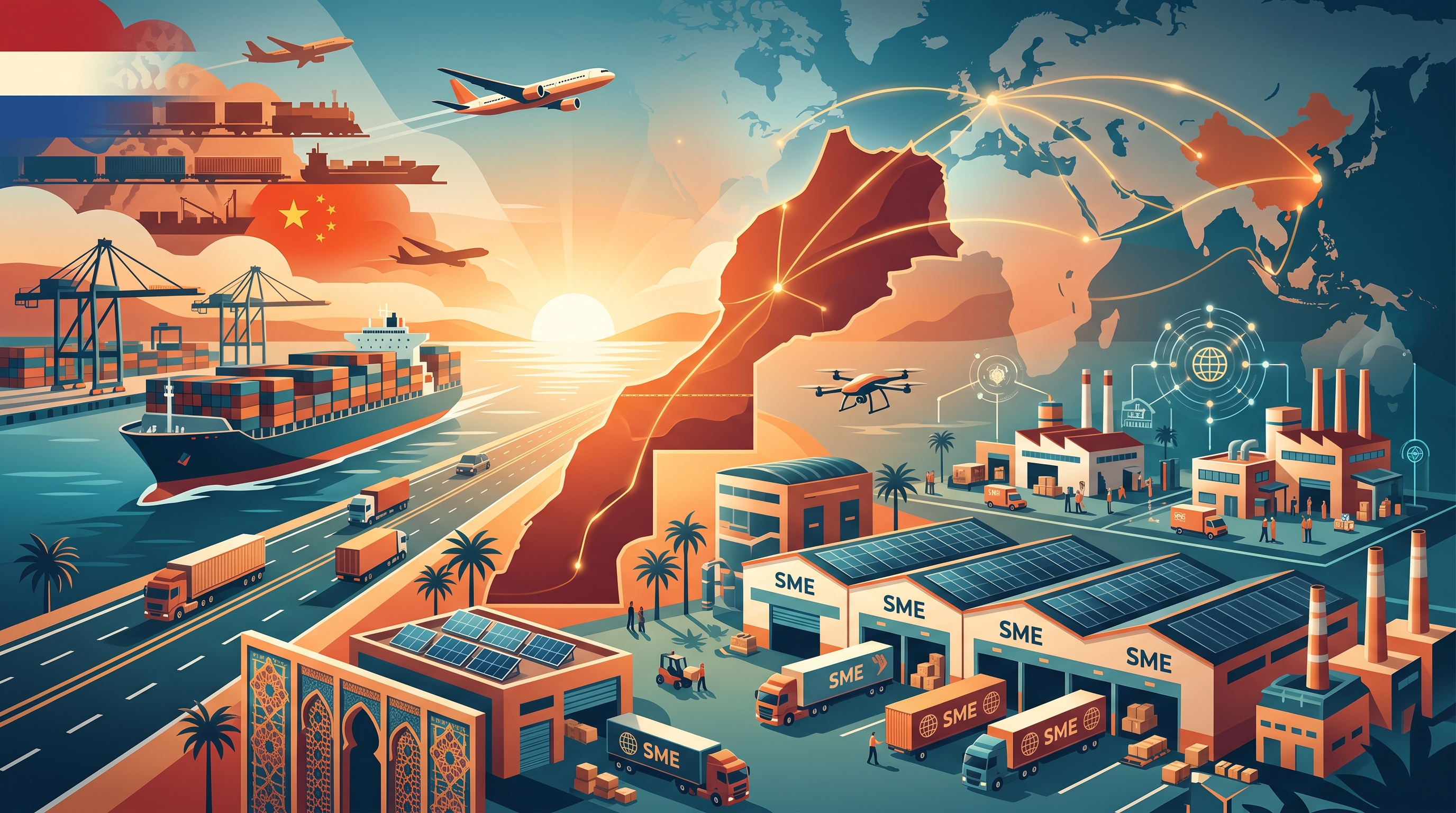
For small and medium-sized enterprises (SMEs) looking to scale globally, finding the right international base can be a game-changer. Historically, massive industrial zones were the playground of Fortune 500 multinationals. However, a major shift is happening in North Africa. Morocco’s Free Zones—officially known as Industrial Acceleration Zones (ZAIs)—have become a highly strategic launching pad for smaller businesses from across the globe, particularly from trade-heavy nations like China and the Netherlands.
Morocco has positioned itself as the ultimate logistics bridge between Africa, Europe, and the Americas. For a smaller business, setting up an entity in these zones offers the infrastructure of a corporate giant with the cost efficiencies needed to remain lean.
Understanding the Free Zone Strategy
Morocco’s free zones are specifically designated economic areas where businesses operate under optimized tax, customs, and administrative frameworks. Prominent hubs like the Tanger Free Zone, Kenitra's Atlantic Free Zone, and Casablanca’s aviation-focused Midparc allow businesses to import components, manufacture or process them, and export finished products with minimal friction.
For SMEs, these zones remove the standard red tape often associated with cross-border expansion. Instead of dealing with separate municipal authorities, businesses interact with a centralized one-stop administrative shop that handles licensing, employment paperwork, and local registrations in one place.
Unlocking the Core Financial Perks
The primary driver for small business foreign investment in Morocco is the highly competitive tax framework. When operating on thin margins, reducing operational overhead is vital for survival. The active financial incentives include:
- The 5-Year Tax Holiday: Eligible companies enjoy a 0% corporate income tax rate for their first five consecutive years of operation. Following this period, the rate transitions to a competitive, fixed 15%.
- Zero Customs & Duty Relief: The zones are treated as out-of-scope territories for customs. This means small businesses can import raw materials, machinery, and specialized tools completely duty-free.
- Full VAT Exemptions: Goods and services moving between or exported out of the free zones are completely exempt from value-added tax (VAT), giving small business cash flow a massive breathing room.
- No Capital Restrictions: Foreign owners enjoy 100% company ownership and the complete freedom to repatriate profits and capital back to their home countries without exchange controls.
Strategic Impact on Dutch and Chinese Small Businesses
While the baseline tax perks are universal, the exact strategic advantages shift depending on where an entrepreneur originates.
For Dutch Businesses: Speed to Market and Lower Overheads
Small businesses in the Netherlands often struggle with soaring domestic energy costs, warehouse real estate shortages, and highly competitive talent pools. Establishing a base in a Moroccan ZAI allows Dutch logistics, tech, and agricultural assembly businesses to slash operational overheads while maintaining close proximity to their main markets.
Morocco sits just 14 kilometers from Spain, and the world-class Tanger Med Port links directly to major European ports like Rotterdam. A Dutch SME can manufacture or package goods in Morocco at a fraction of the cost, loading them onto freight lines that reach continental Europe in less than three days.
For Chinese Businesses: The Ultimate Western Trade Loophole
Chinese small businesses face distinct logistical and geopolitical hurdles, notably rising tariffs and trade tensions with the EU and the United States. Morocco serves as a brilliant structural solution.
Morocco is one of the few nations to hold a Free Trade Agreement (FTA) with the US alongside advanced trade status with the EU. By setting up small assembly, electronics, or textile operations within Moroccan free zones, Chinese entrepreneurs can legally transform products to meet the "rules of origin" requirements. This grants their goods tariff-free access into Western markets, bypassing the direct trade barriers applied to shipments originating from mainland China.
Bridging Infrastructure and Talent
For smaller teams, building a physical setup from scratch is daunting. Morocco solves this by offering high-grade, turn-key infrastructure. Small businesses can rent shared facilities, logistics hubs, or plug-and-play warehouses rather than purchasing real estate outright.
Additionally, the country boasts a vast pool of young, multilingual, and highly skilled professionals. Whether your team needs to converse in English, French, Arabic, or Spanish, local recruitment pipelines—backed by dedicated government vocational programs—make onboarding affordable and reliable.
For any small enterprise aiming to build a more resilient global footprint, Morocco’s Industrial Acceleration Zones offer a uniquely low-risk, high-reward gateway to international expansion.