
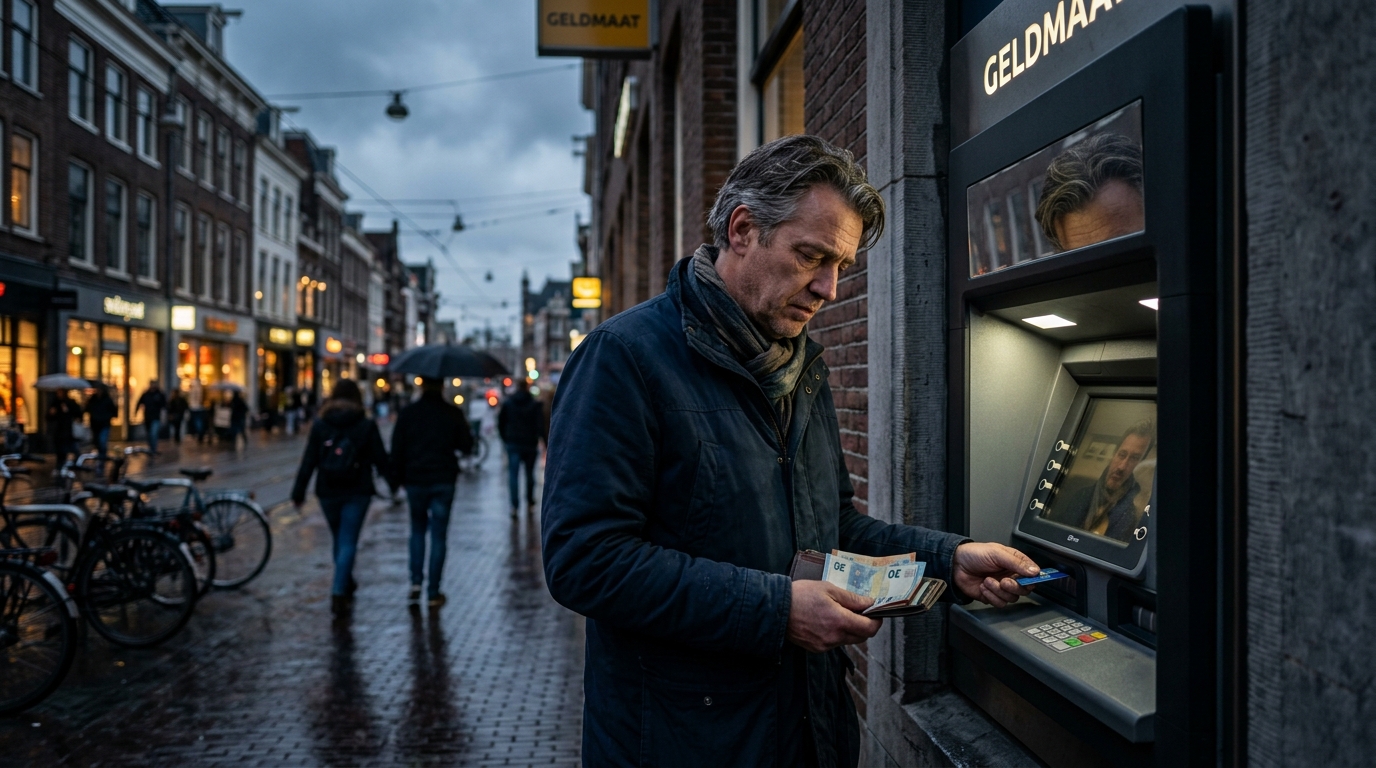
There is a growing, palpable sentiment across the Netherlands that the relationship between the state and its citizens has become transactional in the worst possible way. For the average working individual, watching a significant portion of their monthly earnings vanish into the fiscal machine is tolerable only if that money is visibly reinvested into tangible public goods: reliable infrastructure, functional healthcare, robust education, and safe streets. Yet, an increasing number of taxpayers are starting to voice a frustrating realization: they feel less like valued stakeholders in a shared society and more like an open-ended, walk-in ATM for the government.
This underlying frustration frequently boils over when abstract political rhetoric from the administrative hub of The Hague clashes with concrete economic realities. A recent viral commentary circulating on professional networks perfectly encapsulated this mood, dubbing the current fiscal atmosphere as an endless string of state-sponsored bills where the government discovers a moral cause or a historical injustice and immediately dips its hand into someone else’s pocket.
The crux of the issue does not lie in a collective lack of empathy, but rather in a compounding fatigue over how public money is allocated, justified, and audited. When billions are earmarked for specialized recovery funds, climate transition subsidies, and historical acknowledgments, the working public is left asking basic, foundational questions: Who exactly is paying? Who is receiving? And crucially, when does the bill finally stop accumulating? To these queries, the response from public officials is often a resounding silence, wrapped in layers of bureaucratic obfuscation.
Deconstructing the Numbers: Welfare vs. Historical Reparations
To understand the friction, one must look at how data is frequently weaponized or misinterpreted in public discourse. A prime example involves recent figures released by the Central Bureau of Statistics (CBS) regarding the socioeconomic positioning of various demographics within the country. According to the official CBS data, standard welfare benefit (bijstand) dependency rates for first-generation, foreign-born residents of Surinaamse and Dutch-Caribbean origin hover at 8.7% and 10.8% respectively, compared to the national average of 3.3%.
A critical distinction needs to be made here—one that both government officials and public critics must respect to avoid analytical trickery. These figures represent standard, baseline social safety net allocations meant to prevent poverty. They are entirely separate from, and should not be conflated with, specialized funds set aside for historical reckoning or slavery past awareness initiatives. Mixing these distinct categories serves only to muddy the waters, creating a distorted narrative that alienates the taxpayer while doing a disservice to the minority communities relying on standard social support.
However, the fact remains that the broader public remains hyper-vigilant about how their tax euros are managed. Using historical recognition as an implicit, open-ended justification to distribute public assets without ironclad, transparent conditions is a dangerous precedent. If the state intends to spend millions on systemic redress or community funds, it must provide absolute clarity on the metrics:
- What quantifiable, structural issues are explicitly being addressed?
- What precise criteria determine who qualifies for these programs?
- How are these financial packages calculated to ensure parity?
- Who is independently auditing every single euro to ensure it hits its target instead of dissolving into administrative overhead?
The Crisis of Accountability
The systemic issue deeply frustrating the Dutch populace is a perceived lack of financial responsibility. Politicians are exceptionally skilled at standing before cameras to claim moral high grounds and assume collective historical guilt. However, the moment the public demands a granular, line-by-line financial accounting of where these grand gestures lead, the machinery of state changes its tune. The lofty rhetoric vanishes, replaced by a revolving wheel of endless paperwork, vague policy papers, and shifting goalposts.
This behavior looks less like meaningful social progress and more like expensive political posturing funded entirely by a squeezed middle class. Purchasing a clean institutional conscience using money extracted under threat of audit from hard-working citizens is not a sustainable long-term governance strategy.
As inflation, housing shortages, and energy costs continue to put pressure on households across the Netherlands, the appetite for unchecked state spending is hitting an all-time low. Taxpayers do not fundamentally oppose a compassionate society or a state that remembers its past. What they oppose is a system that treats their labor as an inexhaustible, unconditional resource to be spent on political passion projects without accountability. True governance requires balancing moral aspirations with fiscal discipline—because at the end of the day, a government cannot buy an ethical reputation with a blank check signed by its taxpayers.