
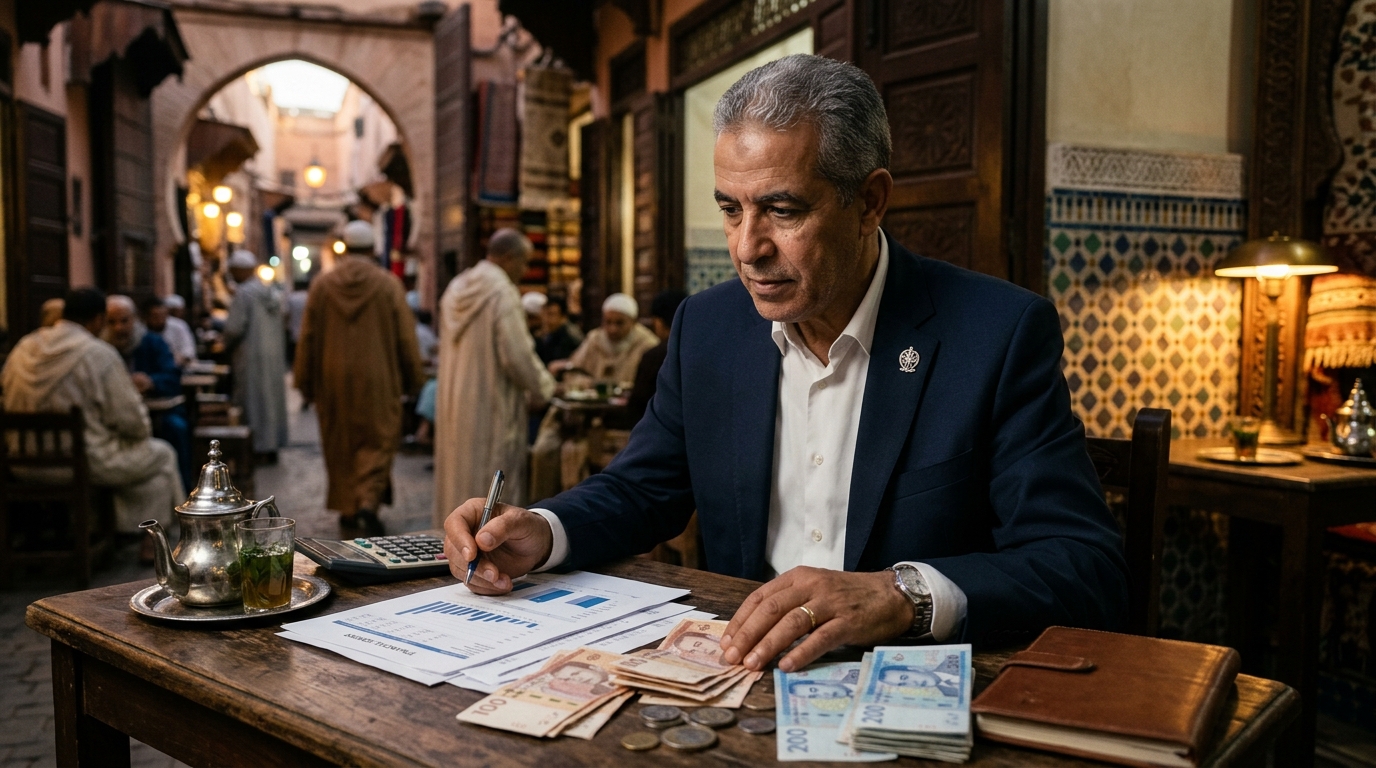
Many Moroccan families are raised on a simple financial rule: keep your money safe in a bank account or hidden securely at home. For generations, holding cash felt like the ultimate security. However, in today’s economic climate, leaving your hard-earned Dirhams (MAD) completely idle is a silent financial trap. Because of inflation, the purchasing power of your money quietly shrinks every year. What 20,000 MAD can buy today will cost significantly more in just a few seasons.
The challenge for the average citizen in Morocco is that modern investment options can feel intimidating. Not everyone is comfortable navigating online stock brokers, cryptocurrency apps, or complex digital trading platforms.
Fortunately, you do not need advanced technology to outsmart inflation. The single most effective financial strategy for everyday Moroccans relies entirely on understanding our local market cycles and leveraging physical, real-world assets.
The Smart Arbitrage: Timing the Summer Euro Influx
The most practical and accessible tip for Moroccan citizens revolves around a predictable annual event: the arrival of the Moroccan Diaspora (MRE) and international tourists during the summer months.
Every summer, hundreds of thousands of visitors enter Morocco carrying Euros. To pay for their vacations, meals, and family expenses, they must exchange those Euros for Moroccan Dirhams. This sudden, massive spike in demand for the Dirham temporarily increases its market value. During July and August, the Dirham is traditionally at its strongest, meaning your Dirhams buy more Euros than at any other time of the year.
This creates a brilliant, low-tech investment cycle you can execute right at local exchange offices (bureaux de change):
- The Summer Exchange (Buying Low): When the summer peak hits and the Dirham is expensive, use your idle cash to purchase Euros. Because the Dirham is strong, you get a premium rate on your foreign currency.
- The Winter Reversal (Selling High): Hold onto those physical Euros securely. Once autumn and winter arrive, the tourist rush clears out, the seasonal demand for Dirhams drops, and the Dirham naturally weakens against the Euro.
- The Profit: Exchange your Euros back into Dirhams during the off-season. Because the Euro is now worth more Dirhams than it was in July, you walk away with more Dirhams than you started with—effectively growing your cash savings without ever touching a computer screen.
This strategy requires zero digital literacy or complex paperwork, only patience and basic timing.
Diversifying into the Concrete: The Power of Physical Gold
While turning Dirhams into Euros is an excellent short-term strategy to beat inflation, long-term wealth protection requires tangible assets. For those looking for an alternative that cannot be erased by inflation, the answer lies in physical gold.
Gold acts as a global shield against rising prices. When a local currency loses purchasing power, the price of gold priced in that currency rises.
When utilizing this method, avoid buying expensive, modern jewelry. Intricate jewelry carries high manufacturing fees (façonnage), which you lose when you resell it. Instead, focus on traditional investment gold:
- Gold Coins (such as the historical L'louiz): These are highly recognized across Morocco and valued strictly for their gold weight and purity.
- Pure Gold Bars (Lingots): Available in small, affordable weights through certified local jewelers and bullion dealers.
Gold requires no internet connection, cannot be hacked, and can be liquidated for cash instantly anywhere in the kingdom if an emergency arises.
Making the Bank Work for You Safely
If you prefer to keep your money inside the traditional banking system but want higher returns than a standard savings account (compte sur carnet), you should explore Term Deposits (Comptes à Terme).
Instead of letting your money sit completely idle, a Term Deposit allows you to lock away a set amount of money for a fixed period (such as 3, 6, or 12 months). In exchange, the bank rewards you with a significantly higher interest rate than a normal account.
According to data monitored by Bank Al-Maghrib, banks frequently adjust these rates based on economic conditions. Locking your funds into a 12-month deposit guarantees a fixed return that chips away at the impact of inflation, keeping your primary capital completely safe from market crashes.
Summary: Take Control of Your Money
The belief that holding paper cash is "safe" is a relic of the past. To survive inflation, your money must move. By simply timing the summer Euro exchange or converting unneeded cash into physical gold, you can protect the fruits of your labor using methods that have worked for generations. Look at the calendar, watch the tourist seasons, and stop letting inflation quietly steal your savings.