
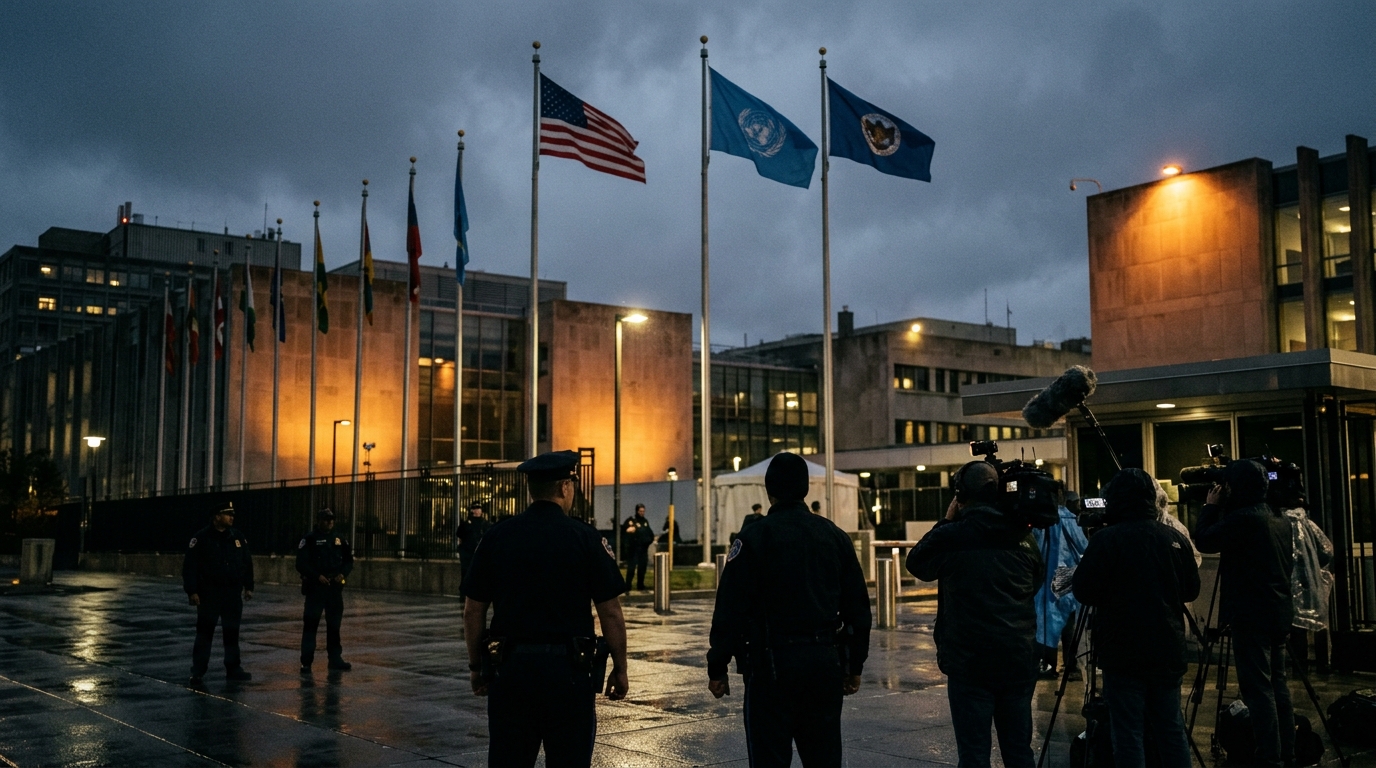
A proposal by United States Defense Secretary Pete Hegseth to publicly broadcast the execution of convicted mass murderer Nidal Hasan has drawn sharp condemnation from the United Nations Human Rights Office. International human rights monitors warned that televising or livestreaming a military firing-squad execution violates international legal standards against cruel, inhuman, and degrading treatment, effectively amounting to torture.
The International Pushback Against a Public Spectacle
UN Human Rights spokesperson Shabia Mantoo emphasized that broadcasting an execution breaches the fundamental prohibition against public spectacles of state-sanctioned violence. Such an act would represent the first public execution in the United States in nearly a century, drawing comparisons to practices routinely condemned in authoritarian regimes.
United Nations High Commissioner for Human Rights Volker Türk has consistently argued that executing individuals publicly—or broadcasting their deaths—deprives convicts of basic human dignity, contrary to the International Covenant on Civil and Political Rights (ICCPR), a treaty ratified by the United States.
Who Is Nidal Hasan? A Traitor from Within
To understand the intensity of the Pentagon's push for this execution, one must examine the specific history and identity of Nidal Malik Hasan. Born in Virginia to Palestinian immigrant parents, Hasan was not an outside insurgent, but an active-duty U.S. Army Major and board-certified psychiatrist.
On November 5, 2009, Hasan walked into the Soldier Readiness Processing Center at Fort Hood (now Fort Cavazos) in Texas. Armed with a laser-equipped FN Five-seven semi-automatic pistol, he shouted "Allahu Akbar" and unleashed a deliberate, calculated massacre against unarmed soldiers preparing for overseas deployment. The rampage resulted in:
- 13 fatalities: 12 uniformed service members—including a pregnant private who pleaded for her unborn child's life—and one civilian employee.
- More than 30 wounded: Dozens of military personnel and civilians sustained severe physical injuries before civilian police officers shot and paralyzed Hasan.
Subsequent investigations revealed that Hasan had become deeply radicalized, having communicated via email with Anwar al-Awlaki, the notorious American-born propagandist for Al-Qaeda in the Arabian Peninsula (AQAP). During his military court-martial, Hasan acted as his own attorney, expressing no remorse and openly declaring himself an Islamist combatant defending the Taliban.
Why Washington Is Adamant About His Execution
For more than a decade and a half, Hasan’s capital sentence has symbolized unresolved political and military outrage in the United States, driven by several key factors:
- Internal Betrayal: Hasan wore the U.S. Army uniform and took an oath of allegiance, yet targeted vulnerable comrades under his professional care. The institutional wound inflicted on the armed forces remains unparalleled in modern military history.
- The "Workplace Violence" Controversy: In the immediate aftermath, the Obama administration categorized the mass shooting as "workplace violence" rather than an act of terrorism. This bureaucratic stance denied victims military honors and combat-related benefits for years, igniting enduring bipartisan outrage among veterans and families.
- A Decisive Political Statement: Hasan remains on military death row at the Disciplinary Barracks in Fort Leavenworth, Kansas. For defense officials, enforcing the death penalty—and doing so conspicuously—represents an unequivocal message against domestic extremism and military treason, closing an agonizing legal chapter that has spanned three presidencies.